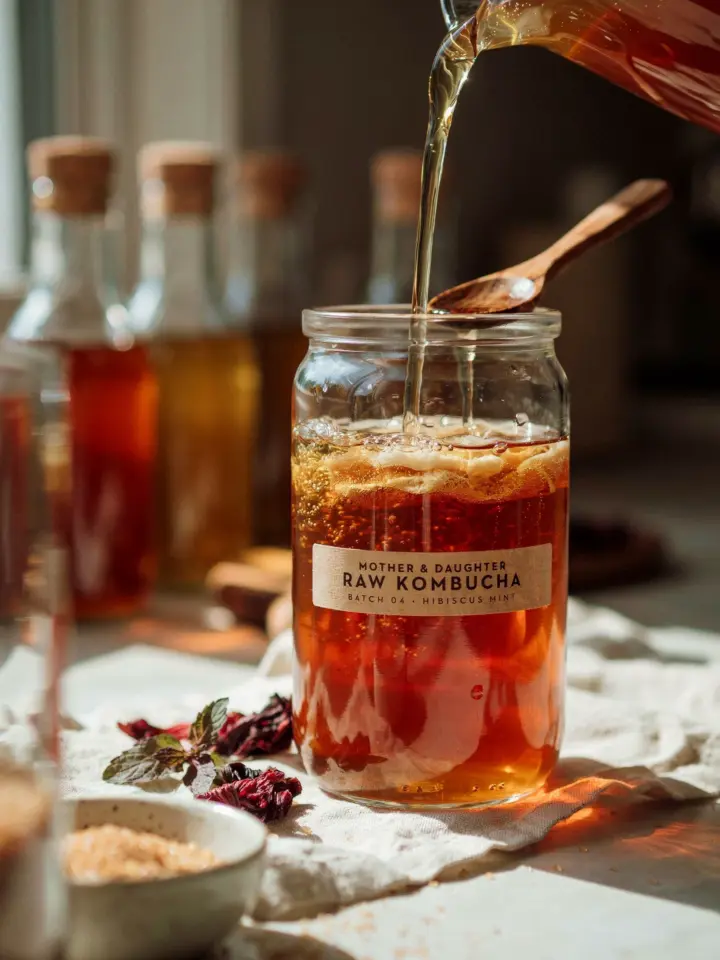
I still remember the first time I brewed a batch of coffee kombucha. I had been making regular kombucha for months, but the idea of combining two of my favorite fermented drinks (coffee and kombucha) felt a little risky. Would my SCOBY survive? Would it taste like weird coffee soda? After a few experiments, I landed on a method that works consistently and tastes genuinely good. This coffee kombucha iced latte recipe is now a staple in my weekly brewing rotation. It is tangy, slightly sweet, and has just enough caffeine to replace my morning cold brew.
How to Make Coffee Kombucha at Home
Making coffee kombucha is not much harder than brewing regular kombucha, but you do need to tweak a few steps. The most important rule is to never put hot coffee directly into your SCOBY. Heat can damage or kill the culture. I always brew a strong batch of cold brew concentrate first. Cold brewing extracts flavor without heat, so it stays gentle on the kombucha culture.
Start with about four cups of filtered water and half a cup of coarsely ground coffee. Let it steep in the fridge for 12 to 18 hours. Strain it through a fine mesh sieve or a coffee filter. You will have a smooth, concentrated coffee liquid that is ready to use. Then, instead of using sweetened tea as your base, use this cold brew concentrate mixed with the same amount of sugar water you would normally use. I dissolve one cup of organic cane sugar in two cups of hot water, let it cool, and then combine it with the cold brew and enough filtered water to make a gallon total.
Simple Coffee Kombucha Iced Latte Recipe
Once your coffee kombucha has fermented for seven to ten days, it is time to turn it into an iced latte. This is the part I look forward to most. The coffee kombucha itself will have a mild vinegar tang with a noticeable coffee aftertaste. To make it creamy and latte-like, I add a splash of milk or a non-dairy alternative such as oat milk. Oat milk gives the smoothest texture without curdling, which can happen with almond milk if the kombucha is very acidic.
- Ingredients: 1 cup of finished coffee kombucha (strained), ½ cup of milk or oat milk, ice cubes, optional sweetener (simple syrup or maple syrup).
- Instructions: Fill a glass with ice. Pour the coffee kombucha over the ice. Add the milk and stir gently. Taste and add a teaspoon of sweetener if you want it less tart. Serve immediately.
- Pro tip: If you prefer a stronger coffee flavor, use a double-strength cold brew in the fermentation step. This gives you a bolder latte without needing extra coffee added later.
Using Your SCOBY for Coffee Kombucha
Your regular kombucha SCOBY can handle coffee just fine, but you need to give it time to adjust. I have read warnings that coffee can darken the SCOBY permanently, and that is true. My SCOBY turned a deep brown after the first batch, but it remained active and healthy. If you are nervous, start with a small experimental batch using only a quart jar. Reserve your main SCOBY for regular tea kombucha until you are sure the coffee version works for you.
I also recommend using a separate vessel for coffee kombucha fermentation. The coffee oils can linger on the glass and affect the flavor of your next tea batch. A simple one-gallon jar with a cloth cover is all you need. After the first fermentation, you can bottle the coffee kombucha with a little extra sugar for carbonation, or drink it flat. I prefer it flat for the latte because the bubbles can make the drink feel a bit sharp.
Kombucha Brewing Tips for Beginners
If you are new to kombucha brewing, coffee kombucha might feel like a big step. Start with a successful batch of plain tea kombucha first. Once you have a healthy SCOBY and a consistent brewing routine, you can experiment with coffee. Here are a few tips that have helped me avoid common mistakes:
- Keep your fermentation temperature between 75 and 85°F. Anything cooler slows down the process and can invite mold.
- Use filtered water. Chlorine in tap water can inhibit the SCOBY.
- Always let your coffee or tea cool completely before adding the SCOBY. Hot liquid kills the culture.
- Starter liquid is essential. Reserve at least one cup of finished plain kombucha from your previous batch to add to the new coffee batch. It lowers the pH and protects against unwanted bacteria.
Probiotic Iced Latte Benefits and Flavor Notes
Drinking a probiotic iced latte sounds like a health food trend, but it actually delivers real benefits. The fermentation process creates live bacteria and yeast that can support digestion, while the coffee provides antioxidants and a mild energy lift. The flavor is unique. It is not exactly like coffee, and it is not exactly like kombucha. It is something in between, with a bright acidity that cuts through the richness of milk.
Some people describe it as having a slight chocolate or roasted nut note, especially if you use a medium roast coffee bean. I have tried lighter roasts, but they can taste too sour when combined with the acetic acid from the kombucha. A medium to dark roast works best for balance. If you want a
#CoffeeKombucha #KombuchaLatte #FermentedDrinks #HomemadeKombucha #KombuchaRecipe
Leave a Comment