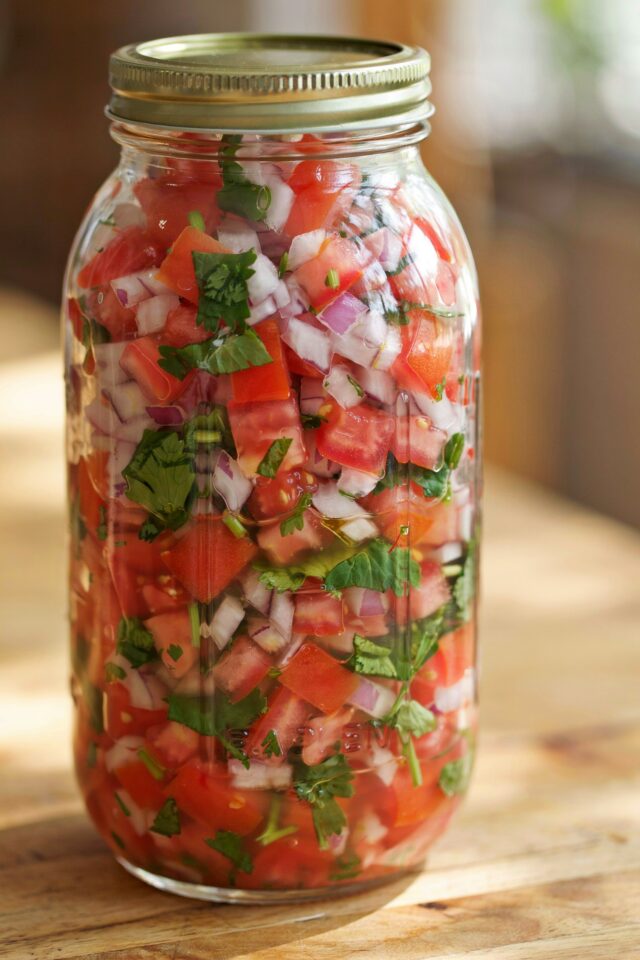
If you have ever stared at a bowl of salsa wondering if there is an easy way to make it last longer and taste even better, this fermented pico de gallo recipe is exactly what you need. It is a simple swap from the usual fresh salsa, but the natural fermentation turns it into a probiotic salsa that supports gut health without any fancy equipment or expensive ingredients. I have been making this on a tight grocery budget for years, and the whole process costs less than a single jar of store-bought fermented salsa. All you need are ripe tomatoes, a jalapeño or two, an onion, some cilantro, salt, and a little patience. The result is a tangy, bubbly condiment that brightens tacos, bowls, and eggs without breaking the bank.
Why Ferment Pico de Gallo? (And Save Money Doing It)
Lacto-fermentation relies on naturally present bacteria to preserve vegetables. When you salt fresh pico de gallo and let it sit at room temperature, those beneficial bacteria multiply, creating lactic acid that acts as a natural preservative. That means your salsa lasts for weeks in the fridge instead of just a few days. For budget-conscious cooks, that alone is a win. You can buy tomatoes on sale, make a big batch, and use it slowly. Plus, you skip the vinegar and sugar that many store salsas rely on, keeping the flavor clean and vegetable-forward.
Another big money saver: fermented foods often require only a small amount of salt and common pantry staples. No special starter cultures, no expensive jars. I use the same quart jar that I use for pickles. This is one of the most affordable ways to get fermented foods into your daily diet. A single batch costs under five dollars and yields about three cups of homemade salsa that is packed with live cultures.
Ingredients for a Budget Friendly Batch of Fermented Pico de Gallo
This recipe is flexible, so feel free to adjust quantities based on what you have on hand. The key ratio to remember is 2% salt by weight of the vegetables. That ensures safe fermentation without making the salsa too salty.
- Roma tomatoes (about 1.5 pounds) – They are cheap, meaty, and hold up well during fermentation. Avoid overripe or mushy tomatoes.
- One medium white or yellow onion – Red onion works too, but white is usually the most affordable.
- One to two jalapeño peppers – Adjust heat to your taste. Remove seeds for less spice.
- One cup chopped fresh cilantro – Cilantro can be pricey, but a bunch is enough. If you dislike cilantro, skip it or use parsley.
- 1 to 2 cloves of garlic (optional) – Garlic adds depth but is not required. I often leave it out to save money.
- Non-iodized salt – Pickling salt or fine sea salt works best. Avoid table salt with iodine or anti-caking agents; they can inhibit fermentation.
- A clean quart jar with a lid – A mason jar or any glass jar works. No need for a fancy fermentation lid. You can use the regular lid but burp it daily to release gas.
That is it. No sugar, no vinegar, no whey. The fermentation happens naturally because of the salt and the bacteria already living on the vegetables. If you want to add a squeeze of lime after fermentation, you can, but I prefer the pure fermented flavor.
Step by Step: How to Make Fermented Pico de Gallo
The technique is almost identical to making fresh pico de gallo, but you add a salt brine and a few days of patience. Here is my tried-and-true method that never fails.
First, dice all the vegetables and herbs and combine them in a bowl. Weigh the total mixture using a kitchen scale. For every 100 grams of vegetables, add 2 grams of salt (2% ratio). It sounds nerdy, but weighing ensures consistent results. If you do not have a scale, use about 1.5 teaspoons of salt per pound of vegetables. Mix everything well and let it sit for 10 minutes so the salt draws out the vegetable juices. Then pack the mixture into a clean quart jar, pressing down firmly with a spoon to release air pockets. The liquid should rise above the solid vegetables. If it does not, add a small amount of a 2% brine (2 grams salt per 100 milliliters of water
#FermentedPicoDeGallo #ProbioticSalsa #FermentedFoods #GutHealthRecipe #HomemadeSalsa
Leave a Comment