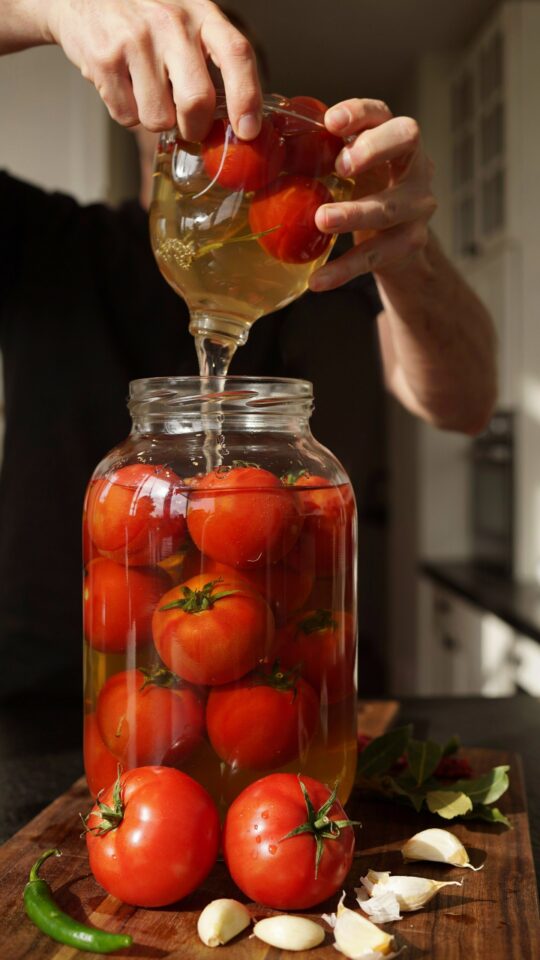
I have to admit, I was skeptical the first time I heard about fermented tomatoes. Fresh tomatoes are already juicy, sweet, and perfect. Why mess with them? But a few years ago, after a bumper crop left me with pounds of cherry tomatoes I couldn’t eat fast enough, I decided to try this fermentation thing. What came out of that jar after just a few days completely changed my mind. Those little tomatoes had turned into something else entirely: bold, tangy, and deeply savory, like a concentrated summer punch with a fizz. And the process? Dump tomatoes in a jar, add salt and water, wait. That is pretty much it. If you have never tried making fermented tomatoes, this post is for you. I am going to walk through the whole thing assuming you have never fermented anything before, because that was me once, and I wish someone had spelled it out this simply.
Why I Started Fermenting Tomatoes (And You Should Too)
Before I fermented a single tomato, I was already obsessed with pickles, sauerkraut, and kimchi. But tomatoes seemed tricky. They are soft and prone to turning mushy. I assumed fermentation would turn them into a slimy mess. I was wrong. When done right, fermented tomatoes stay firm (or even get a little firmer) and develop a complex tang that no other pickling method can match. Plus, they are packed with probiotics, live bacteria that are great for your gut. That alone made me want to try it.
Another reason I love this recipe is that it uses no vinegar and no heat. Just salt, water, and time. You get a shelf-stable (once refrigerated) ingredient that adds instant acidity and umami to any dish. And since the process is so forgiving, it is a perfect first project if you are new to fermentationrecipes. There is no starter culture to buy, no special equipment beyond a jar and a lid.
The Simple Science Behind Fermented Tomatoes
Lacto-fermentation sounds fancy, but it is just using salt to encourage good bacteria (lactobacillus) to thrive while bad bacteria get pushed out. The salt creates an environment where lactobacillus can eat the natural sugars in the tomatoes and produce lactic acid. That acid is what preserves the tomatoes and gives them that tangy, bright flavor. Think of it as a controlled souring process, like what happens when you make sour pickles or real sauerkraut.
With tomatoes, the brine needs to be about 2% salt by weight. That is roughly one teaspoon of salt per cup of water, but I always weigh things for accuracy. The salt draws out moisture, and the tomatoes stay submerged to avoid mold. Three days at room temperature is usually enough to get them bubbling and tangy, though they keep developing flavor for weeks.
What You Need to Get Started
The ingredient list is painfully short: tomatoes, salt, water. But there are a few tools that make the process smoother. Here is what I use every time:
- Wide mouth glass jar (a quart size works for a pound of cherry tomatoes)
- Fine sea salt or kosher salt (no iodine, no anti-caking agents – those can mess with fermentation)
- Filtered or distilled water (tap water with chlorine can inhibit good bacteria, but letting it sit out overnight works too)
- A fermentation weight or a small jar to keep tomatoes submerged below the brine
- A lid that allows gas to escape (an airlock lid is nice, but a regular lid slightly loosened works fine – just burp it daily)
If you do not have a fermentation weight, do not buy one yet. I have used a clean ziplock bag filled with brine, or even a smaller jam jar placed on top of the tomatoes to hold them down. The key is keeping everything submerged so mold cannot grow on exposed bits.
Step by Step: My Easy Fermentation Recipe
Wash your tomatoes and remove any stems. I prefer cherry or grape tomatoes because they stay firmer and are easy to pack. Larger tomatoes can be cut into wedges or used whole if you poke them with a fork to let the brine in. Pack them into your clean jar, leaving about an inch of headspace at the top.
Make your brine: dissolve 1 teaspoon of salt per cup of water (or 2% ratio: 20 grams of salt per liter of water). Pour the brine over the tomatoes until they are completely covered. Use your weight to push them down. Screw the lid on loosely (or use an airlock) and set the
#fermentedtomatoes #fermentationrecipes #probioticfoods #homemadeferments #tomatofermentation
Leave a Comment