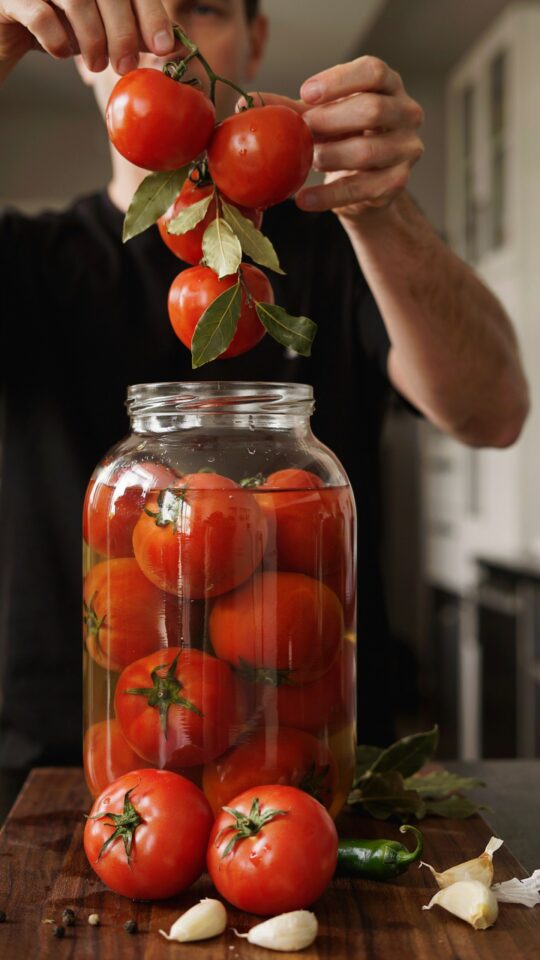
If you have never tried fermented tomatoes, you are missing out on one of the easiest and most rewarding ways to preserve your garden harvest. Unlike canning, which relies on heat, fermentation uses salt and time to develop a bold tangy flavor that brightens up salads, sandwiches, and grain bowls. This guide walks you through several creative ways to ferment tomatoes at home, each with its own twist. Whether you are a beginner or a seasoned pickler, these ideas will keep your pantry stocked with probiotic-rich goodness all year round.
Classic Garlic and Dill Fermented Tomatoes
This is the starter recipe that every home fermenter should try. You need firm, ripe tomatoes (Roma or cherry work best), fresh garlic cloves, a handful of dill sprigs, and fine sea salt. The process is simple: pack a clean quart jar with washed tomatoes, add 3 to 4 crushed garlic cloves and a few dill heads, then pour in a brine made from 1 tablespoon of salt dissolved in 2 cups of filtered water.
Weigh the tomatoes down with a fermentation weight or a small clean rock so they stay submerged. Cover the jar with a cloth and a rubber band, and let it sit at room temperature for 5 to 7 days. Taste on day five. The tangy flavor deepens the longer it ferments, but you can stop when it tastes lively and acidic. Transfer to the fridge to slow the fermentation. These tomatoes are fantastic in a Greek salad or chopped into tuna salad for extra zest.
One tip: avoid overripe or soft tomatoes. They turn mushy fast. Stick with firm, slightly underripe fruit for the best texture.
Spicy Pepper and Cilantro Ferment for Heat Lovers
If you enjoy a kick, this version turns up the heat without overwhelming the tomato taste. Use a mix of cherry tomatoes and halved jalapeños or serranos. Add a few slices of red bell pepper for sweetness, along with a bunch of fresh cilantro stems. The brine ratio stays the same: 2 to 3 percent salt by weight of the total vegetables and water.
Here is the trick: the peppers release capsaicin into the brine, so the tomatoes themselves become mildly spicy. You can also toss in a dried chili for deeper warmth. Ferment for 6 to 8 days, then taste. The cilantro adds a bright, herbal note that pairs beautifully with the heat. Use these tomatoes to top tacos, nachos, or a bowl of black beans. They also make a mean bloody mary garnish when you muddle a few into the glass.
- Use gloves when handling hot peppers to avoid burning your skin.
- Halve larger peppers so the brine penetrates evenly.
- Add a bay leaf to keep the tomatoes crisp and ward off unwanted mold.
- Label the jar with the date and pepper type so you remember the heat level later.
This fermentation recipe is a great way to use up a bag of chili peppers when your garden produces more than you can eat fresh.
Herb Garden Medley with Basil and Oregano
Tomatoes and herbs are a classic pair, and fermenting together intensifies both. Try a blend of fresh basil, oregano, and a few sprigs of thyme. The herbs infuse the brine with a savory, almost Italian-like aroma. Use cherry tomatoes or small plum tomatoes halved so the herbs can reach the flesh.
Pack the jar with layers of tomatoes and herbs, plus a couple of garlic cloves. Pour in the same salt brine (2 tablespoons salt per quart of water). Ferment for 5 to 7 days. The result is a homemade pickles experience that tastes like summer in a jar. I love chopping these tomatoes into a pasta salad or layering them on a Caprese-style plate with fresh mozzarella. You can even use the leftover herb brine as a vinaigrette base.
Dried herbs can substitute if fresh are unavailable, but use half the amount since dried flavor is more concentrated. Crumble them between your fingers before adding to release the oils.
Quick Fermented Tomato Salsa (Ready in 3 Days)
This one is for impatient cooks. Instead of whole tomatoes, dice ripe tomatoes and mix them with chopped onion, jalapeño, cilantro, lime juice, and salt. Pack the mixture into a jar, leaving an inch of headspace. Ferment for only 2 to 3 days at room temperature. The short time gives you a probiotic foods boost while keeping a fresh, salsa-like texture.
The key difference from a traditional salsa is the salt content. Use 1.5 teaspoons of salt per pound of chopped tomatoes. The fermentation adds a subtle fizz and sour note that store-bought salsa never has. Taste daily and refrigerate once it reaches your preferred tang. This works best as a small batch you eat within a week. It is phenomenal on scrambled eggs or grilled fish.
Be careful with wooden spoons or metal lids. The acid can react with metal, so use plastic or glass fermentation lids and a wooden or silicone spoon for stirring.
Sweet and Tangy Tomato Chutney with Raisins
Fermentation does not have to be sour. For a sweet spin, make a chunky tomato chutney with raisins, grated ginger, and a pinch of cinnamon. Use about 2 cups of chopped tomatoes, half a cup of raisins, a tablespoon of fresh grated ginger, and a teaspoon of salt. Mix everything in a bowl, then pack into a jar. Press down
#fermentedtomatoes #fermentationrecipe #homemadepickles #tangyflavor #probioticfoods
Leave a Comment