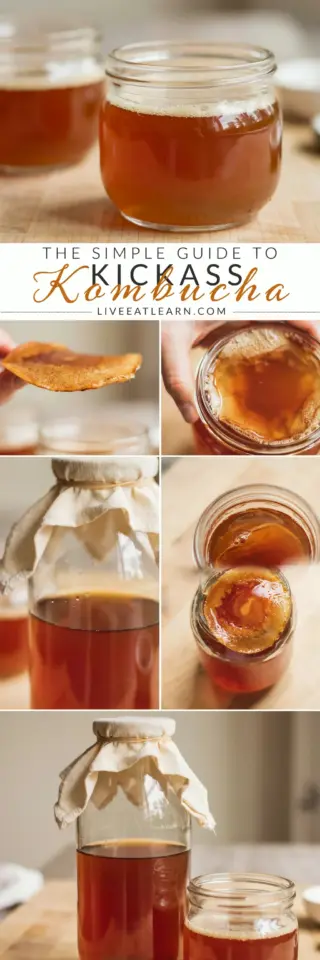
I remember my first jar of kombucha bubbling away on the kitchen counter, a mix of excitement and fear. Would it turn into vinegar? Would mold ruin it? But the process turned out to be simpler and more forgiving than I expected. If you want to learn how to make kombucha from scratch, you really only need tea, sugar, and a bottle of raw store-bought kombucha. That store-bought bottle is your starter liquid, and it will help you grow a healthy SCOBY (symbiotic culture of bacteria and yeast) in about two weeks. From there, you can brew batch after batch, experimenting with flavors that taste far better than anything from the store. Let me walk you through exactly what worked for me, step by step.
Why Start with a Store-Bought Bottle to Grow Your Own SCOBY
Many guides tell you to buy a dried SCOBY online or get one from a friend. But if you have no friends who brew and you want to start today, a bottle of plain, unflavored raw kombucha from the grocery store works perfectly. Look for one that says “raw” and “unpasteurized” on the label. Flavored versions often have extra oils or preservatives that can slow down or ruin the culture. I used a bottle of plain GT’s original kombucha, and within ten days I had a thick, creamy SCOBY floating on the surface of my sweet tea. The key is to keep the jar warm (around 75 to 85°F) and undisturbed. If your house is cool, a seedling heat mat wrapped around the jar can help.
The Essentials: Tea, Sugar, and a Clean Jar
You do not need fancy equipment. A large glass jar (half gallon or gallon size) is best because plastic can scratch and harbor bacteria, and metal can react with the acidic kombucha. For tea, use plain black or green tea without any added oils or flavors. I prefer a mix of half black and half green for a balanced taste. Sugar is non-negotiable: white granulated sugar works best because the yeast needs simple sucrose to ferment. Do not use honey or artificial sweeteners. The ratio that works every time is 1 cup of sugar per gallon of water, plus 8 tea bags (or 2 tablespoons of loose leaf). After you boil the water, steep the tea for 10 to 15 minutes, dissolve the sugar, then let it cool completely before adding your starter liquid. Hot tea will kill the good bacteria.
- Jar: 1 gallon glass jar, wide mouth recommended.
- Tea: 8 bags of black or green tea (no flavored blends).
- Sugar: 1 cup of white granulated sugar.
- Starter liquid: 1 to 2 cups of raw, unflavored kombucha.
- Cover: A clean cloth or coffee filter secured with a rubber band.
Step by Step: Brewing Your First Batch of Kombucha
Once you have your SCOBY grown from the store-bought bottle, it is time to make your first full batch. Start by brewing a fresh gallon of sweet tea as described above. Cool it completely, then pour it into your clean glass jar. Add 1 to 2 cups of the liquid from your SCOBY starter jar (this is your “strong starter” that keeps the pH low and prevents mold). Gently place your new SCOBY on top. Cover the jar with a cloth and secure it with a rubber band. Place it somewhere warm, away from direct sunlight and strong drafts. I put mine on top of the refrigerator, where it stays around 78°F. Do not disturb it for at least 7 days. The first few days you will see bubbles and maybe a new thin SCOBY forming on top. That is a good sign.
How to Know When Your Kombucha is Ready to Bottle
Patience is the hardest part of homebrewing. Taste your kombucha after 7 days using a clean straw. If it is still sweet and syrupy, it needs more time. If it is tangy and slightly vinegary with a pleasant fizz, it is ready. I usually aim for a taste that is about 70% of the way to store-bought kombucha, because it will continue to ferment in the bottle. For a gallon batch, that typically takes 10 to 14 days in my kitchen. If you see a brown stringy blob floating in the jar, do not worry. That is a yeast strand, perfectly normal. You can strain it out later. When the flavor is right, remove the SCOBY with clean hands and set it aside in a small bowl with some of the kombucha liquid. This is your mother SCOBY for the next batch.
Flavoring Your Kombucha: Simple Fruit Combos That Work
After bottling (I use swing-top glass bottles), you can add fruit, herbs, or spices for a second fermentation that creates carbonation. My favorite combos are fresh ginger and lemon, frozen raspberries with
#kombucha #howtomakekombucha #scoby #fermentation #homebrewing
Leave a Comment