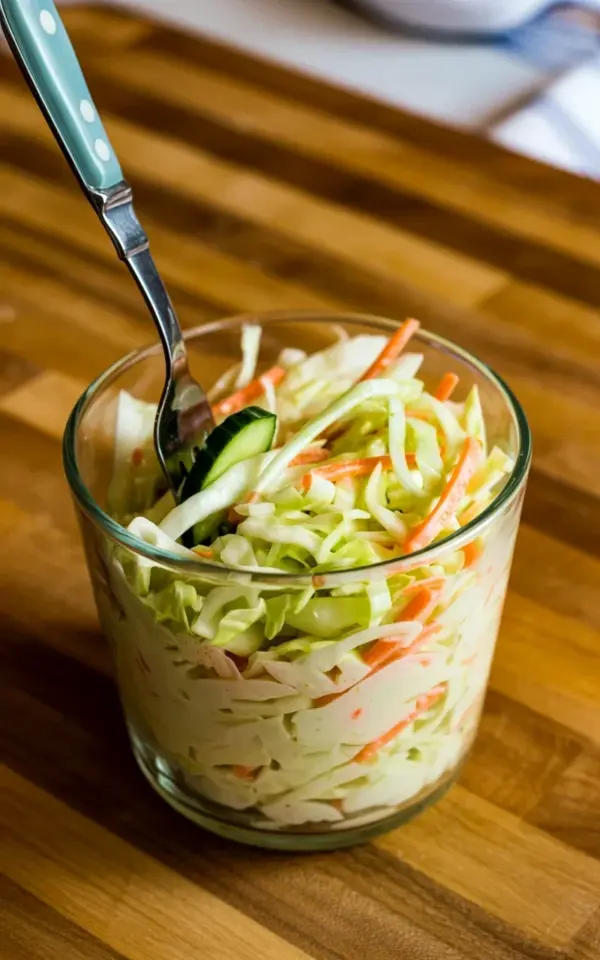
This creamy coleslaw with cabbage, carrot and cucumber is the side dish that saves busy weeknights. I photographed mine in a clear glass container on a wooden butcher block, the pale yellow dressing coating every shred evenly. A silver fork with a light blue handle sits ready, waiting for you to dig in. This recipe is quick, reliable, and perfect for meal prep. The key is the crisp cucumber pieces and thin julienned carrots suspended in a dressing that stays creamy but never heavy. Let me walk you through exactly how to make it.
Why This Creamy Coleslaw Recipe Works for Meal Prep
Meal prep often means sacrificing texture. Not here. This coleslaw holds up for three to four days in the fridge because the dressing acts as a gentle barrier that keeps the vegetables crisp. The cucumber adds a refreshing crunch that stays for at least two days if you slice it thin enough. The shredded cabbage and carrots soften slightly but never turn limp. I make a batch on Sunday and use it alongside grilled chicken, roasted sausages, or even spooned into tacos later in the week. It saves time without tasting like leftovers.
Another reason it performs well for meal prep is the dressing. It is not a thin vinegar based sauce that soaks in overnight. Instead it is a thick, pale yellow emulsion that clings to each strand. When you store the coleslaw in an airtight container, the dressing remains stable. You do not need to drain or re season it before serving.
The Best Cabbage, Carrot and Cucumber Ratio
Getting the ratio right keeps every bite balanced. I use three parts green cabbage to one part white cabbage (or savoy if that is what you have) for color contrast. Then I add half a part carrot and half a part cucumber. That might sound technical, but in practice it means a standard head of green cabbage (about two pounds) needs one small carrot and half an English cucumber. English cucumbers are better because they have fewer seeds and thinner skin, so you do not need to peel them.
- Green cabbage – main bulk, shred finely for the best texture.
- White or napa cabbage – adds softer leaves and a milder taste.
- Carrot – julienned into thin matchsticks, not shredded in a food processor.
- English cucumber – quartered lengthwise, then sliced into small half moons.
If you only have regular cucumbers, peel them and scoop out the seeds before cutting. That extra step prevents the coleslaw from getting watery.
How to Make a Pale Yellow Dressing from Scratch
The dressing is the soul of this creamy coleslaw. It gets its pale yellow color from a combination of mayonnaise, a splash of lemon juice, and a tiny pinch of turmeric. The turmeric is optional but it gives that warm sunny tone you see in the photo. I start with half a cup of full fat mayonnaise. Then I add two tablespoons of whole milk or buttermilk, one tablespoon of lemon juice, half a teaspoon of sugar, a quarter teaspoon of salt, and a pinch of turmeric. Whisk everything in a bowl until it becomes a smooth, slightly thick sauce.
Taste it before you add it to the vegetables. It should be tangy and creamy with just a hint of sweetness. If you want it thinner, add another splash of milk. If you want more tang, add a little more lemon juice. The dressing should coat a spoon evenly without running off too quickly. That is the consistency you want for a creamy coleslaw that stays on the cabbage and cucumber instead of pooling at the bottom of the bowl.
Step by Step: Shredding, Julienning and Mixing
Start with the cabbage. Remove any wilted outer leaves, cut the head into quarters, and slice out the core. Lay each quarter flat on the cutting board and cut across the grain into thin ribbons. Aim for strips about an eighth of an inch wide. Thicker shreds take longer to soften and can feel chewy. For the carrot, peel it first, then cut it into two inch lengths. Stack the pieces and slice them lengthwise into thin planks. Then stack those planks and cut them into matchsticks. This method gives you neat, even julienne pieces that mix well with the cabbage.
For the cucumber, slice it in half lengthwise, then into quarters. Cut the quarters into small chunks about half an inch wide. They should be bite sized but not too thick. Combine all the vegetables in a large mixing bowl. Pour the dressing over them and toss gently with a rubber spatula or your hands. Make sure every piece gets coated. Cover the bowl and refrigerate for at least thirty minutes before serving. This resting time allows the flavors to meld without the vegetables releasing too much water.
Tips for Keeping Your Coleslaw Crunchy and Not Soggy
Soggy coleslaw usually comes from two mistakes: not drying the vegetables well, or dressing them too far ahead. After you wash the cabbage and cucumber, spin them in a salad spinner or pat them dry with a clean towel. Even a little excess water will dilute the dressing and make everything limp. Another trick is to salt the cabbage lightly before adding the dressing. Let it sit for ten minutes, then squeeze out any released liquid. That step is called salting and pressing, and it firms up the cabbage fibers so they stay crisp.
If you are making this coleslaw for a party and want to prep it hours earlier, keep the dressing separate until just before serving. Pour it on and toss right before the guests arrive. The vegetables will stay crunchy for up to four hours after dressing, especially if you use the salting technique. In the photo on my wooden butcher block, you can see how the fork picks up shreds that still have structure. That is what you want.
Serving Ideas: Pairs with Grilled Meats and Pickled Vegetables
This creamy coleslaw is a natural companion for grilled meats. I serve it with smoky barbecue chicken, juicy pork chops, or rare grilled flank steak. The cool, creamy texture contrasts beautifully with charred edges and spicy rubs. It also works well alongside pickled vegetables, which I love to add for acidity. Set out a small bowl of pickled red onions or quick pickled jalapeños next to the coleslaw. Guests can mix and match on their plates.
Another unexpected pairing: spoon this coleslaw onto a pulled pork sandwich or a crispy fish taco. It replaces the typical shredded lettuce and adds a creamy element that holds everything together. For a lighter meal, pile it on a bed of arugula with some toasted pumpkin seeds. The dressing does all the work as your sauce. No need for extra vinaigrette.
Storage and Make Ahead Instructions
Store leftover creamy coleslaw in a glass container with a tight fitting lid. It will keep in the refrigerator for up to four days. The cucumber might soften after day two, but the cabbage and carrot stay pleasantly crunchy. If you want to revive the texture, add a tablespoon of fresh dressing and toss again. Do not freeze coleslaw. The dressing will separate and the vegetables will turn mushy when thawed.
To make this recipe even faster for busy weeks, prep the vegetables dry in a bag or container up to three days ahead. Shred the cabbage, julienne the carrot, and slice the cucumber. Store them separately so the cucumber does not make the cabbage wet. Whisk the dressing in a jar and refrigerate it. When you are ready to eat, combine everything and toss. That way you get the taste of fresh coleslaw in under five minutes.
This creamy coleslaw with cabbage, carrot and cucumber is one of those recipes you will keep coming back to. It is simple enough for a Tuesday night dinner, but special enough for a backyard cookout. Try it tonight and see how the pale yellow dressing brings everything together. Save this easy recipe for the next time you need a quick side dish that actually delivers on crunch and flavor. Your fork is waiting.
#coleslaw #creamycoleslaw #cabbagesalad #mealprepidea #easysidedish
Leave a Comment