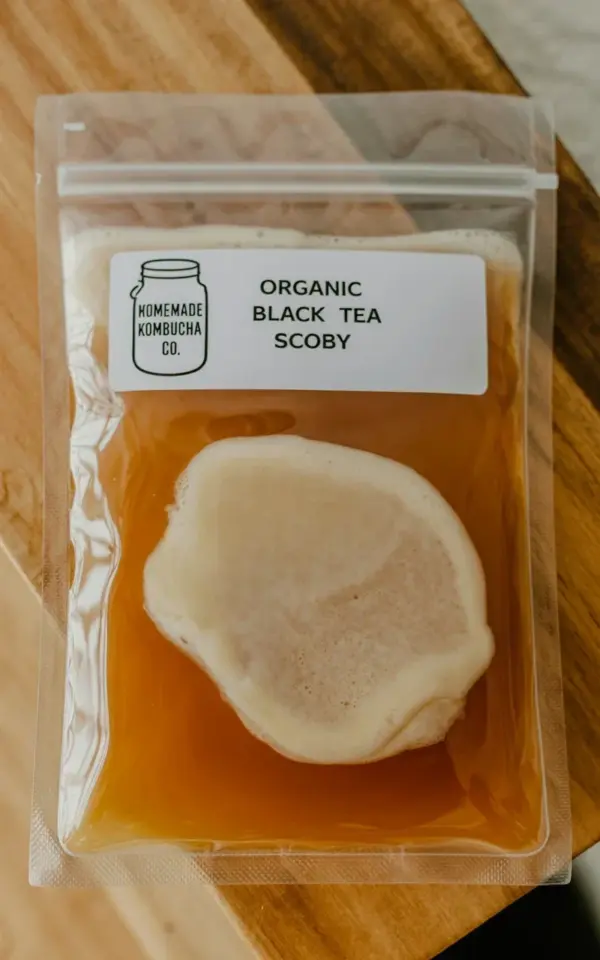
There it is, sitting in a clear plastic pouch: a creamy white disc, gelatinous and slightly translucent, floating in deep amber liquid. The label reads “HOMEMADE KOMBUCHA CO.” with “ORGANIC BLACK TEA SCOBY” printed right below. That is a healthy kombucha SCOBY, and it is the exact picture you should keep in mind when shopping for your first brewing culture. Unfortunately, plenty of people end up with something dry, weak, or grown from poor ingredients, and their homemade kombucha never gets a fair start.
What a Healthy Kombucha SCOBY Looks Like
A fresh SCOBY is a living thing. It should be firm enough to hold its shape but still feel jelly-like when you touch it. You want that translucent, gelatinous look, similar to a soft contact lens but much bigger. In the photo that inspired this article, the SCOBY is about 2 to 3 inches across and sits in golden brown liquid on a light wooden surface. That liquid is leftover kombucha, often called starter tea, and it matters just as much as the culture itself.
The color of the tea tells a story. A rich amber tone means the SCOBY has been living in organic black tea and thriving. If the liquid looks murky or the disc seems thin and ragged, pass on it. You want a culture that looks alive, not one that arrived dried out in a plastic bag.
Why Organic Black Tea Is Non-Negotiable
Kombucha SCOBYs are sensitive to what they are fed. The yeast and bacteria in the culture rely on nutrients found in tea leaves, and non-organic teas can carry pesticide residues that slow that process down. Some commercial teas even include added oils or flavorings that coat the culture and interfere with fermentation.
Organic black tea gives the SCOBY clean, consistent food. It also produces a deeper and richer flavor in your finished brew. When you buy from a seller like HOMEMADE KOMBUCHA CO., you want a culture that has been raised on organic leaves from the very start. A SCOBY grown that way is stronger, more resilient, and far more likely to deliver a great first batch.
Kombucha Mistakes That Ruin a Batch Before You Start
The biggest kombucha mistake is buying a SCOBY that looks weak or shows up dry. A dehydrated culture can sometimes be revived, but it is never as robust as one that ships in liquid. That amber starter tea matters because it lowers the pH of your new batch, which prevents mold and unwanted bacteria from moving in.
- Choosing a seller that does not show clear photos of the actual culture
- Buying a SCOBY shipped in plain water instead of amber kombucha liquid
- Skipping organic black tea just to save two dollars
- Using tap water without filtering out chlorine, which can harm the culture
- Pouring the starter tea down the drain because you only wanted the disc
That last one hurts to admit. The liquid in the package is not waste. It is the most valuable part of your purchase. When you mix it into sweet organic black tea, you give your kombucha SCOBY a head start that nothing else can replace.
Budget Friendly Organic Black Tea Options
You do not need to spend a fortune to brew homemade kombucha. Loose leaf organic black tea from a bulk bin is affordable and works beautifully. Look for blends like English Breakfast or Assam. Both provide the tannins and caffeine the SCOBY needs to produce a tangy, gently fizzy drink.
Store brand organic tea bags are another solid choice. Many grocery chains now offer organic black tea at a price that feels almost too good to be true. Just read the ingredient list. It should say black tea and nothing else. No bergamot, no cinnamon, no natural flavorings, because those extras confuse the culture and change the taste of your final
Leave a Comment