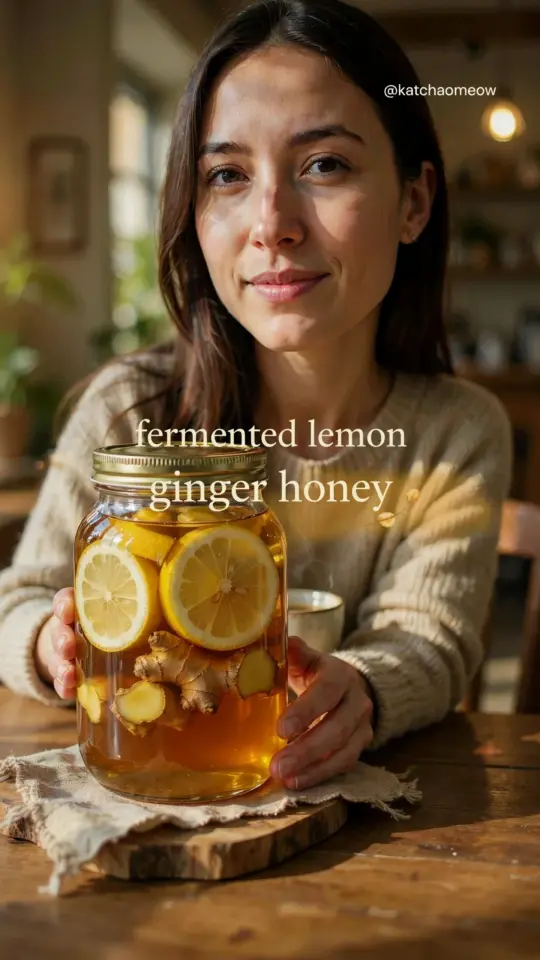
The first time I made fermented lemon ginger honey, I honestly didn’t know if I was doing it right. I just had a bag of organic lemons, a chunk of fresh ginger, and a jar of raw honey that was about to crystallize into a brick. So I sliced, layered, poured, and stuck the whole thing in a corner of my kitchen counter. Three days later, the jar was bubbling like a tiny science experiment, and I was hooked for life. This fermented lemon ginger honey is one of the easiest, most rewarding ferments I make all year, and it doubles as a homemade cold-season remedy that actually tastes good.
Why I make fermented lemon ginger honey every winter
Every January, my kitchen counter becomes a graveyard of half-used cold remedies. That’s when I remember this jar. It’s not a cure, it’s not a miracle, it’s just really good at making you feel a little less like a damp sock.
There’s something about the way the honey pulls the moisture out of the lemon slices. The rinds soften over a week or two. The ginger keeps its bite but mellows into something warm and smooth. And the honey itself, it turns thinner, tangier, and almost fizzy if you let it go long enough. That fizz is the probiotic activity doing its thing, not spoilage. It’s alive. Look, fermentedhoney never really goes bad, but it does change. And that change is exactly what I’m after.
I use this in tea when I’m congested, but honestly, I use it in sparkling water more. A spoonful in a cold glass of fizz is like a fancy soda, minus the weird aftertaste.
What you actually need for this lemongingerhoney recipe
Ok so here’s the thing, you need two ingredients. That’s it. Two. But you do need to be picky about them because the whole batch depends on it.
- Lemons, preferably organic or at least unwaxed. You are eating the rind, so do not skimp here.
- Fresh ginger root, a chunk about the size of your thumb or two.
- Raw honey. Not the pasteurized stuff in the bear bottle, it has to be raw because that’s where the natural yeast and enzymes live.
- A clean glass jar with a lid, and a spoon or chopstick to stir with.
That’s the whole shopping list. If you want to add a pinch of sea salt or a vanilla bean, go ahead, but the basic recipe is almost stupidly simple. Wash your lemons well. Slice them thin, like a quarter inch thick at most. Peel the ginger and slice it into thin coins or matchsticks, whatever you feel like. Layer everything in the jar as you go, then pour the honey over the top until the jar is full. You want the honey to be runny enough to fill all the gaps. If it’s too thick, warm it very slightly in a bowl of hot water so it pours.
Then you stir. You stir, you scrape the sides, you make sure every lemon slice is coated. Then you cap it and forget about it for a bit. Not totally forget, though, you’ll want to burp that lid every day.
The fermentation timeline and what to expect
Day one looks like nothing. You will peek at the jar and think you did it wrong. That’s normal. Give it time.
By day two or three, you should see tiny bubbles forming along the edges of the lemon rinds. The honey will start to look cloudy in spots. If you open the jar to release pressure, you’ll hear a little hiss. That is the sound of a good ferment. It’s also the sound of your kitchen officially becoming a lab, which I think is fun.
By day five to seven, the color deepens. The honey turns a shade of amber that looks almost syrupy, and the lemon rinds start to look translucent. That’s the sign that the honey has pulled out all the citrus oils and the ferment is working through the sugars. I usually start tasting mine around day four with a clean spoon. If it tastes more like lemony honey, let it go longer. If it has a slight tang on the back of your throat, you are done.
Keep this jar going for a month and you get something even better. The ginger becomes almost candy-like, not crunchy at all, just soft and spicy. It’s incredible on a piece of toast.
How do you know if your honey ferment is working or is it mold
Honestly? If you see fuzzy mold, it’s mold. Throw it out and start over. But here’s the thing, mold on a honey ferment is rare. Honey is naturally antibacterial and low in moisture, so the conditions for mold are pretty poor. More often than not, people confuse the natural foam or the carbonation bubbles with spoilage.
One time I opened my jar and a little bit of liquid bubbled out and ran down the counter. I panicked for a second. Then I realized, the ferment was just active, it wasn’t ruined. If it smells yeasty like beer or sourdough, that’s a good sign. If it smells sour and rotten, like a wet sponge left in the sink, that’s your cue to ditch it. Trust your nose. It knows.
Also, do not use a metal spoon to stir the ferment. The acidity of the lemon reacts with metal and can affect the taste. Use wood or plastic or a chopstick. It’s a small detail, but it matters.
Ways to use fermented honey beyond tea
Tea is the obvious one. A spoonful in a mug of hot water with a bit of extra lemon is cozy and practical. But this stuff is way too good to hide. I also pour it over plain Greek yogurt in the morning. The tangy honey soaks into the creamy yogurt and it tastes like a fancy parfait you’d pay way too much for at a café.
Another idea, and this one is weirdly good, use it as a marinade for chicken thighs. The enzymes in the honey and the acid from the lemon tenderize the meat, and the ginger adds a subtle warmth. Mix two spoonfuls of your fermented honey with a splash of soy sauce and a minced garlic clove, then let the chicken sit for an hour. You will never eat plain grilled chicken the same way again.
For a quick salad dressing, whisk a spoonful of the honey with olive oil and a little Dijon mustard. It’s bright, it’s a little bit funky, and it makes a boring green salad feel like you actually tried.
Storing your probiotic honey and how long it lasts
Once you’re happy with the flavor, move the jar to the fridge. The cold slows down the fermentation process, so it stays at that perfect tangy level for months. Some people keep it on the counter indefinitely, but I like the fridge because it keeps the ginger from getting too hot and overpowering the lemon.
You’ll notice the honey gets more syrupy in the cold. That’s just the honey doing its natural thing, a quick warm bath will loosen it up again if you need it to pour. I have a jar in my fridge right now that is from October, and it’s still bubbling mildly. It’s still delicious. The lemon rinds have basically turned into a soft, tart marmalade, and the honey has a gentle effervescence that feels a little rebellious for a fridge jar.
If you make a big batch and give some away as gifts, don’t forget to label it. I learned that the hard way when my friend thought it was just honey lemon jam and slathered it on a scone. It’s definitely not jam.
Start your own jar today
I know making fermented foods can feel intimidating. You worry about botulism, you worry about ruining ingredients, you worry about that one uncle who will judge your kitchen experiments. Just start small. Use one lemon, a little ginger, and a small jar. If it works, great. If it doesn’t, you lost about two dollars in ingredients.
There are a lot of fermentationrecipes out there, but this one is forgiving. It doesn’t mind if you’re a little imprecise. It doesn’t need a special airlock, just a jar and a daily lid burp. And the payoff is a jar of something bright, spicy, and alive to get you through the dreary months. I think you’re going to love it. Save this one, make a batch, and let me know how it turns out. I’m serious, I love hearing about other people’s ferments, even the failed ones. Probably especially the failed ones.
#fermentedhoney #lemongingerhoney #fermentationrecipes #probiotic #honeyferment
Leave a Comment