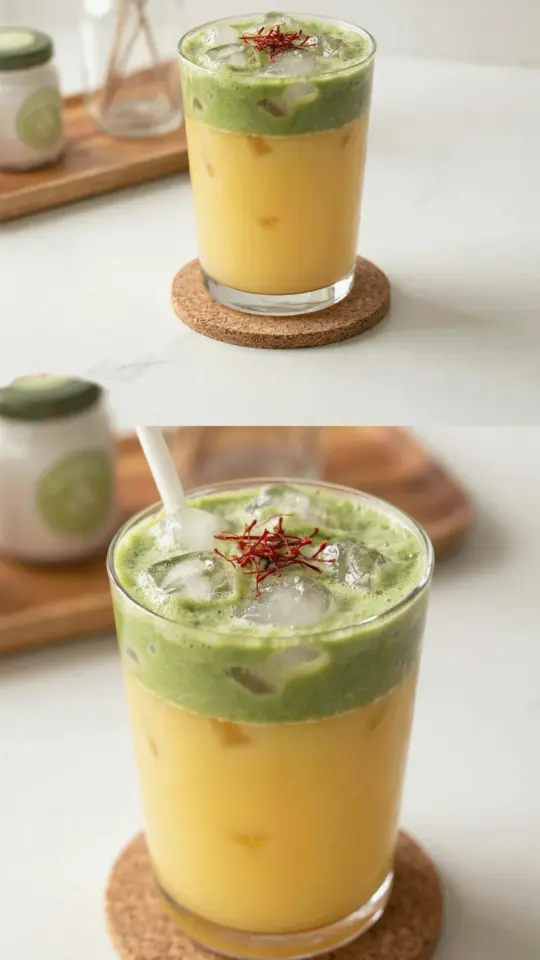
I’ve been making this Matcha Mango Lassi Smoothie with Probiotic Yogurt for Gut Health almost every morning lately, and honestly, it took me a few messy tries to get it right. You’d think blending mango, matcha, and yogurt is foolproof, but nope. I’ve ended up with bitter green sludge, watery messes, and even a curdled disaster that I had to dump down the sink. So let me save you the trouble – here are the common mistakes I made and exactly how to avoid them.
Using the Wrong Matcha Powder (A Common Matcha Mistake)
Not all matcha is created equal, and I learned that the hard way. I once grabbed a cheap “culinary grade” matcha from a random online store – figured it would be fine since I was blending it anyway. Big mistake. That stuff tasted like burnt spinach and grass clippings. My entire smoothie was ruined, and I almost gave up on this recipe entirely.
Here’s the thing: for a matcharecipes like this lassi, you want a good quality ceremonial or premium grade matcha. Culinary grade is meant for baking, where you mask it with sugar and butter. For a smoothie where the matcha is front and center, spend a few extra dollars. Look for a vibrant green color (dull yellow-green is a red flag) and check the origin – Japanese matcha from Uji or Kagoshima is usually solid. I now buy from a small brand I trust, and the difference is night and day.
Skipping the Probiotic Yogurt or Choosing the Wrong One
Look, I know the recipe title says probiotic yogurt, but I’ve been tempted to just use whatever yogurt I had on hand. Greek yogurt, coconut yogurt, even that sad container of vanilla stuff in the back of the fridge. Not all yogurts deliver the gut-friendly bacteria you want. Some are heat-treated after culturing, which kills the probiotics. Others have so much added sugar they cancel out any health benefit.
For a truly effective probioticyogurt boost, check the label for “live and active cultures.” The good brands list strains like Lactobacillus acidophilus or Bifidobacterium. I use a plain full-fat Greek yogurt from a local dairy (it’s thick, tangy, and loaded with probiotics). And here’s a weird detail: I once forgot to add the yogurt entirely. Just blended mango, milk, and matcha. It was a sad green smoothie, not a lassi. Don’t skip it. That yogurt is the whole point for gut health.
- Best picks: plain Greek yogurt, skyr, or a unsweetened kefir (even more probiotic punch).
- Avoid: sweetened fruit-on-the-bottom yogurts, dairy-free alternatives without added cultures, and anything labeled “yogurt flavored” (it’s not real yogurt).
- Pro tip: If you’re dairy sensitive, try a coconut yogurt with live cultures – just blend a little longer to get it smooth.
Overpowering the Mango with Too Much Matcha
I love matcha. More than is probably reasonable. So my first instinct was to double the amount – more antioxidants, more energy, right? Wrong. The bitterness took over, and the mango was completely silenced. That sweet tropical flavor is the star of a matchalassi, not an afterthought. You need balance: the mango brings natural sweetness and a creamy texture that plays off the earthy matcha.
Start with one teaspoon of matcha per serving. That’s about 2 grams. If you’re a matcha fanatic, you can push it to 1.5 teaspoons, but no more. Any more and the smoothie turns into a grassy fight. Also, use ripe mango – I’m talking soft, fragrant, almost too sweet. Frozen mango chunks work great, but thaw them slightly so they blend without ice chunks. A little squeeze of lime juice brightens everything and cuts any lingering bitterness. Seriously, it’s a game changer.
Not Balancing the Sweetness (Yes, Mango Is Sweet Enough – Usually)
Here’s where I got cocky. I thought, “Mango is super sweet, I don’t need any added sweetener.” And that works if your mango is perfectly ripe and your yogurt is plain unsweetened. But sometimes mangoes are a little tart, or your yogurt is extra tangy, and suddenly your smoothie tastes like a sour green tea bomb. Not good.
I now taste my mango before blending. If it’s not at peak sweetness, I add half a frozen banana or a teaspoon of raw honey. The honey also has some prebiotic properties, which support the probiotics in the yogurt. Win-win. Another smoothierecipe trick: a pitted Medjool date works beautifully and adds fiber. But don’t go overboard – you want the mango to still shine, not be coated in sugar. A little goes a long way.
Blending Too Long or Not Enough (Texture Matters)
You’d think blending is blending, right? Hit the button and walk away. But I’ve had two opposite disasters: a chunk-filled mess because I was impatient, and a thin, watery smoothie because I let it run for a full minute. The ideal texture for a lassi is thick and creamy, almost like a milkshake, not a thin juice.
For optimal guthealth benefits, the probiotics need to survive, and over-blending can generate heat that kills some of those delicate bacteria. So blend just until smooth – about 20 to 30 seconds on high. Use a good blender (my old one left green flecks of matcha powder, which was gross). I now use a high-speed blender and pulse at first to incorporate the matcha without it flying everywhere. Then give it one steady blast. If it’s too thick, add a splash of milk (oat or dairy both work). Too thin? Throw in a handful of ice cubes or a few more frozen mango chunks.
And here’s a silly tangent: my cat once jumped on the blender button while it was still assembled. The whole thing turned into a green cyclone. I spent ten minutes wiping matcha off the ceiling. So maybe keep your pets away from the counter. Not that you asked.
Ignoring Temperature and Refrigeration
I’m a fan of cold things, so naturally I thought any smoothie should be ice-cold. But a traditional lassi is served cool, not frozen solid. If you overload with ice or frozen fruit straight from the freezer, you get a slushy that separates and tastes watery as it melts. Worse, if you make a big batch and store it, the matcha settles and the texture gets weird.
My solution: use frozen mango but let it sit on the counter for 5 minutes before blending. Or use fresh mango and add a couple of ice cubes. Drink it within 15 minutes for the freshest flavor and maximum probiotic count. If you must prep ahead, store the smoothie in a sealed jar in the fridge (no more than 24 hours). Shake it well before drinking, and expect some separation. That’s normal. Just stir it back together.
Oh, and don’t leave it in a warm car. Yes, I did that. The smoothie turned into a sad, curdled mess. Rookie move.
So Really, Just Avoid These Mistakes and Your Gut Will Thank You
This Matcha Mango Lassi has become my go-to for busy mornings or post-workout refueling. It’s creamy, sweet, and packed with probiotics and antioxidants, all without tasting like a health sacrifice. Honestly, once you nail the balance – good matcha, live yogurt, ripe mango, and a gentle blend – it’s hard to go back to plain old smoothies. Your gut gets a dose of good bacteria, your taste buds get a treat, and you feel like you’ve got your life together. Even if, like me, you’re cleaning matcha off the ceiling.
Now go grab your blender. Give this a whirl, and let me know if you find a new favorite combination. I’m always tweaking mine.
#matcharecipes #guthealth #smoothierecipe #probioticyogurt #matchalassi
Leave a Comment