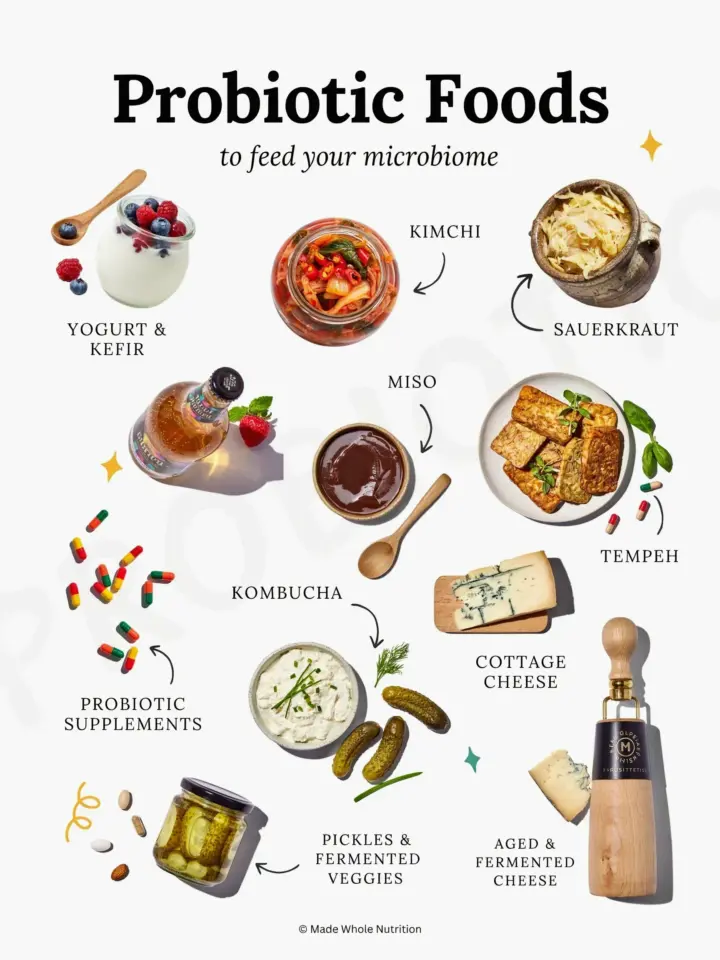
Go open your refrigerator. I mean it, right now, look inside and see if there’s anything in there that’s actively fermenting, or if it’s just a sad collection of condiments and last week’s takeout. If you’ve been thinking about improving your microbiome health but haven’t actually changed what you’re eating, you’re stuck in the same loop most people get stuck in. I was there too, reading about probiotics at 11pm while eating a slice of bread, wondering why my gut felt so heavy.
This bundle actually started because I kept making the same mistakes over and over when trying to add fermented foods to my day. I’d buy a jar of sauerkraut, eat a spoonful, feel nothing, and then forget about it entirely. The Microbiome Health Handout Bundle is my system for tracking the before and after of adding fermented veggies and pickles to my routine, so I can’t fool myself into thinking I’m doing something when I’m really not.
The concept is simple: you eat probiotic foods, you track your symptoms, and you see what actually shifts. But the execution? That’s where everyone trips up. So let’s talk about the five most common mistakes I see, and how to actually avoid them.
Mistake Number One: Buying The Wrong Fermented Veggies
Here’s the thing, not everything in the refrigerated section of your grocery store is actually fermented. I spent two weeks eating “pickles” that were just cucumbers sitting in vinegar, wondering why my digestion wasn’t changing. Yeah, vinegar pickles taste great on a burger, but they don’t contain live probiotics. You need the stuff that’s fermented in a saltwater brine, not acid.
Look for the word “live” or “raw” on the label. Better yet, check the ingredients list. If you see vinegar anywhere near the top, it’s probably not providing the probiotic punch you’re after. Real fermented veggies usually have a cloudy liquid and need to be refrigerated. If the jar sat on a shelf at room temperature, the bacteria is likely pasteurized out of existence.
You want krauts, kimchi, and cucumber pickles that were made with salt and water and time. Those are the ones that can actually seed your gut with beneficial bacteria. If you’re not sure, try a local brand from a farmers market, those folks usually know exactly what’s in their jars.
Mistake Two: Eating Too Much, Way Too Fast
I get it, you’re excited. You just bought a giant jar of kimchi and you think you need to eat the whole thing today to fix years of gut issues. Please don’t do this. You will not enjoy the consequences. Introducing a sudden flood of live bacteria into a gut that isn’t used to it can cause bloating, gas, and a general feeling of being a human balloon.
Start with one tablespoon. That’s it. Like a small sidekick to your meal, not the main event. Your gut microbiome needs to adjust gradually, especially if you’ve been eating a highly processed diet for a while. The whole point of the handout bundle is to track a slow shift, not to shock your system into rebellion.
If you’ve never had fermented foods before, treat them like a condiment. Add a tiny forkful of sauerkraut to your eggs. Put a little spoonful of kimchi juice into a salad dressing. The goal is to introduce the bacteria without creating chaos in your digestive tract.
Mistake Three: Ignoring The Baseline (You Need a “Before”)
You cannot track an improvement if you don’t know what your starting point is. Most people just start eating pickles and hope they feel better, but they didn’t write down how they felt on day one. How can you possibly know if the fermented veggies are working if you don’t know how much gas you had before you started?
This is exactly why I built a symptom tracker into the bundle. You need a concrete, written record of your bloating, your energy levels, your mood, and your digestion before you even open a jar. It sounds obsessive, but it’s just practical. You’re basically running a little science experiment on your own body, and a science experiment needs data.
Take a few days to just observe. Note your baseline digestion on a scale of 1 to 10. Jot down how often you feel sluggish after meals. Then, when you introduce the probiotic foods, you can look at your notes and see if there’s a real difference. It’s way too easy to forget how bad you felt a week ago, trust me.
Mistake Four: Not Pairing Probiotic Foods With Prebiotic Fiber
Ok so here is the part that almost nobody talks about. Probiotics are the beneficial bacteria you’re eating, but they need food to survive once they get to your gut. That food is called prebiotic fiber. If you’re just eating yogurt and pickles but no plants, those little bacteria are basically starving to death in a barren wasteland.
You gotta feed the new bugs. Think onions, garlic, leeks, asparagus, bananas, and oats. Honestly, even a simple bowl of oatmeal with some banana slices on top will help keep those fermented veggies working for you. Without prebiotics, you’re just passing the bacteria through without letting them settle in and multiply.
This is a mistake I made for months, and it wasn’t until I started adding more fiber that I actually noticed a huge shift in my gut health. It’s like planting a garden and then forgetting to water it. You need both sides of the equation for the whole thing to work.
Mistake Five: Quitting Because You Don’t See Immediate Results
We live in a world of instant gratification, so it’s easy to expect your digestion to be perfect after three days of eating fermented veggies. Realistically, it takes time for your gut lining to heal and for the microbial balance to change. I’m talking weeks, maybe even a month, before you notice a consistent pattern.
The printable tracker is designed to help you stick with it longer. There’s something psychologically satisfying about checking off a box each day. If you just wing it, you’ll probably forget by Thursday. But if you have a physical page in your binder, it becomes a daily ritual, a little reminder that you’re doing something good for your body. I keep mine on the fridge with a magnet, next to a takeout menu that I’m trying to ignore.
The goal is to look at the whole month, not just the first few days. Some days you’ll feel great, some days you won’t. The data will reveal the trend, you just have to give it enough time to show up.
Using The Microbiome Health Handout To Track Your Gut Shift
So how does this all come together? The bundle includes a few different pages: a fermentation basics cheat sheet, a list of the best probiotic foods, and a daily symptom tracker. You can print it out, put it in a binder, and keep it right next to your coffee maker.
The point isn’t to be perfect. The point is to be aware. You’re building a personal health record that shows you exactly what happens when you add these foods into your day. It makes your choices visible, and honestly, it makes the whole process a little more fun. I find that tracking my mood alongside my digestion is wild, because I can see how connected my brain and my gut really are.
It’s also great for taking to your doctor or nutritionist. Instead of saying “I tried probiotics and they didn’t work,” you can show them a whole chart of what you did, what you ate, and how you felt. That kind of information is absolutely gold for getting better health advice.
What I Actually Learned From My Own Experiment
When I stopped pretending I could just eyeball this and started writing everything down, I noticed that I was always bloating on Wednesdays. I had no idea why. Turns out, it was the massive burrito I was eating for lunch, not the kimchi I was worried about. Without the tracker, I would have blamed the fermented foods and quit.
That’s the biggest lesson here, don’t blame the pickles for something the burrito is doing. Use the data to figure out your actual patterns. Your gut is unique, and the only way to crack the code is to watch what happens over a long enough timeline. Anyway, that’s why a simple handout bundle works better than any fancy supplement or generic gut cleanse.
It puts you back in control. It gives you a system. And that’s a genuinely powerful thing when you’re trying to make a real shift in how you feel every single day. I honestly think everyone should do a little experiment like this at least once.
If you’re tired of guessing and you want a clear way to see if adding probiotic foods to your day is working, grab the printable bundle for your binder. Just print it out and start tracking tonight. Your gut will thank you, or at the very least, you’ll finally have a clue about what’s going on in there.
Leave a Comment