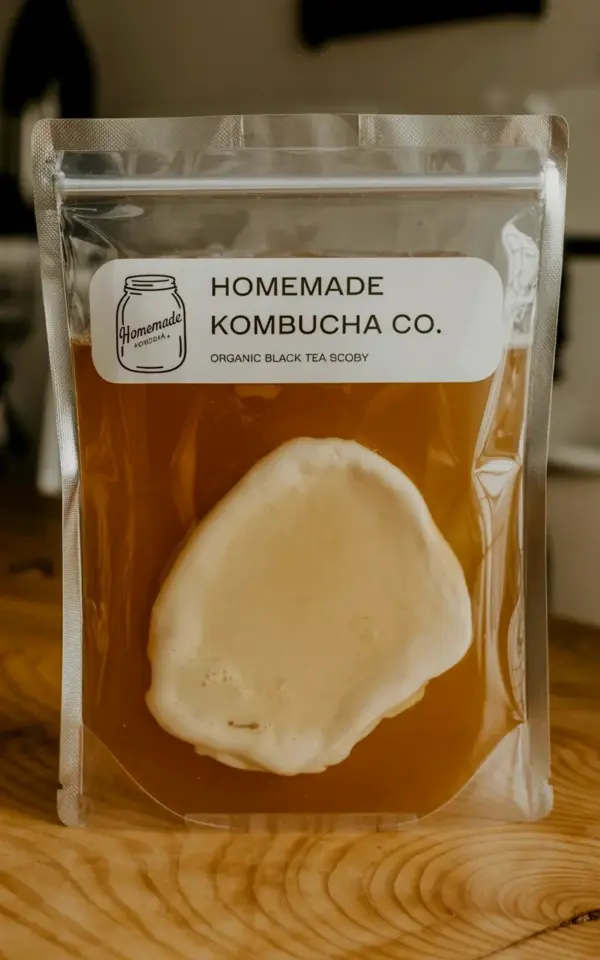
I picked up this organic black tea SCOBY starter for homemade kombucha just as the leaves started turning, knowing that fall brewing has its own rhythm. The package in the photo is exactly what arrived: a clear resealable bag with a large white SCOBY floating in amber liquid, the label reading “HOMEMADE KOMBUCHA CO.” and “ORGANIC BLACK TEA SCOBY”. It felt like a solid investment for under fifteen dollars, and I wanted to share how you can get the same results without spending on expensive equipment or fancy ingredients. This guide is for anyone who wants real, affordable kombucha that works.
Why a Reliable SCOBY Starter Matters for Fall Brewing
Starting fresh in cooler months can be tricky because fermentation slows down below seventy degrees. A mature, healthy SCOBY gives you a head start. The culture I received was already thick and gelatinous, about two and a half inches across, which meant it had enough yeast and bacteria to handle a slower brew. A weak or dried-out starter often fails in autumn, so paying a few extra bucks for a verified organic culture saves you wasted tea and sugar later. That piece of reassurance is worth it when you are on a tight budget.
Fall also means you might be using heartier teas like black or oolong, which need a robust SCOBY to break down the tannins properly. This organic black tea culture came from a batch that already thrived on black tea, so there was no sulking period. It went straight to work, which matters when you only have one jar and want to avoid mold.
What’s Inside the Package? Real Talk About the Photo
Let’s talk about that plastic bag in the photo because it tells you a lot. The liquid is a rich golden-brown, not pale or watery. That amber color means the starter liquid is full of organic acids and live yeast, the good stuff that lowers the pH so bad bacteria cannot take hold. The SCOBY itself is white and translucent, with a smooth surface and a few darker strings hanging off the edges. Those strings are normal. They are active yeast strands, not contamination.
On a budget, you might be tempted to buy a dehydrated or powdered starter, but the liquid in this package already gives you a ready-made acidic environment. You just pour the whole thing into a jar, add your sweet tea, and let it work. No waiting days for a dry culture to rehydrate. That saved me time and a few dollars in wasted ingredients when my first attempt with a cheap online one failed.
How to Start Your Fall Batch Without Fancy Gear
You do not need a special brewing vessel or a heating pad, though those help. Here is my low-cost setup that works with this organic SCOBY starter:
- A clean glass jar (one gallon or half gallon) that used to hold pickles or pasta sauce. Boil it to sterilize.
- A cotton dish towel or coffee filter held on with a rubber band. No expensive cloth needed.
- A dark cupboard in the warmest part of your kitchen. If your house runs cold, set the jar on top of the fridge or near the water heater.
- Basic black tea bags from the grocery store. I use organic store brand because it is cheap and reliable.
- White cane sugar, not honey or brown sugar, if you want consistent results without guessing.
That is it. The SCOBY from the package is already large enough to cover the surface of a half-gallon jar. I did not have to buy a second one or wait for it to grow. For under three dollars in tea and sugar, I had a batch fermenting within an hour of opening the package.
Choosing the Right Tea for Your Budget
The label says “organic black tea SCOBY” and that is the tea you want to use for the first few batches. Black tea gives the culture the tannins and caffeine it loves. You can switch to green or herbal blends later once the SCOBY is thick and happy, but starting with black tea is the safest bet, especially in fall when temperatures are lower.
I buy loose leaf black tea from the bulk bin at my local co-op. It costs about half the price of bagged tea and tastes fresher. If you do not have a bulk store, generic organic black tea bags work fine. Just use four to six bags per gallon, depending on how strong you like it. Avoid teas with oils or flavorings, because those can harm your SCOBY. Plain tea, plain sugar, plain water. That is the budget-friendly formula.
Tips for a Strong First Fermentation with This Starter
When you pour the contents of that package into your jar, you get both the SCOBY and the amber liquid. Do not throw that liquid away. It is the most valuable part because it already contains the right bacteria and yeast balance. Add it directly to your cooled sweet tea. Then place the SCOBY on top, cover the jar, and leave it alone for seven to ten days.
Fall fermentation can take longer. I check mine after day seven by tasting a small sip through a clean straw. If it is still sweet, I let it go another three days. The SCOBY in the photo was thick enough that it did not sink or wobble. A healthy starter should float or hang below the surface. If it sinks to the bottom and stays there, your tea might be too hot or the room too cold. I keep my jar on a shelf away from drafts, and so far it has produced a tangy, fizzy batch every time.
Common Beginner Mistakes and How to Avoid Them
Starting from an organic SCOBY starter like this one removes many pitfalls, but a few mistakes still happen. Here is what I have learned the hard way:
- Using metal utensils or jars. The acid reacts with metal, so stick to glass, wood, or plastic. I use a wooden spoon for stirring.
- Closing the jar too tight. The culture needs oxygen to ferment, so a loose cloth cover is essential. Screw lids cause mold.
- Adding too much fruit or flavoring too early. That can weaken the SCOBY. I wait until the second fermentation to add ginger or berries.
- Not saving backup liquid. Always keep a cup of finished kombucha from each batch to start the next one. That way you never have to buy another starter.
These tips apply whether you are using this specific package or a friend’s donated SCOBY. The key is consistency, not complexity.
Making the Most of Your Second Fermentation on a Shoestring
After the first fermentation, you will have about a gallon of tangy kombucha and a new SCOBY layer on top. You can bottle the liquid in reused glass bottles from store-bought kombucha or even old soda bottles. For carbonation, add a teaspoon of sugar or a few slices of ginger to each bottle and seal them tight. Let them sit at room temperature for two to three days, then refrigerate.
Fall flavors like apple, cinnamon, or pear work great and are cheap if you buy in season. Grate a small piece of fresh ginger or add a cinnamon stick. The organic starter culture gives a clean taste that does not clash with spices. I have saved a lot of money by making my own instead of buying four dollar bottles at the grocery store.
Starting your own fall batch with an organic black tea SCOBY from Homemade Kombucha Co. is about as straightforward as it gets. The package in the photo gives you everything you need except the tea and sugar, and it sets you up for months of continuous brewing if you save the backup liquid. Give it a try while the weather is still cool, and you will have a steady supply of tangy kombucha without breaking your budget. Save this pin for your next project, and let me know how your batch turns out.
#kombuchastarter #organicSCOBY #kombuchabrewing #fermentation #homemadekombucha
Leave a Comment