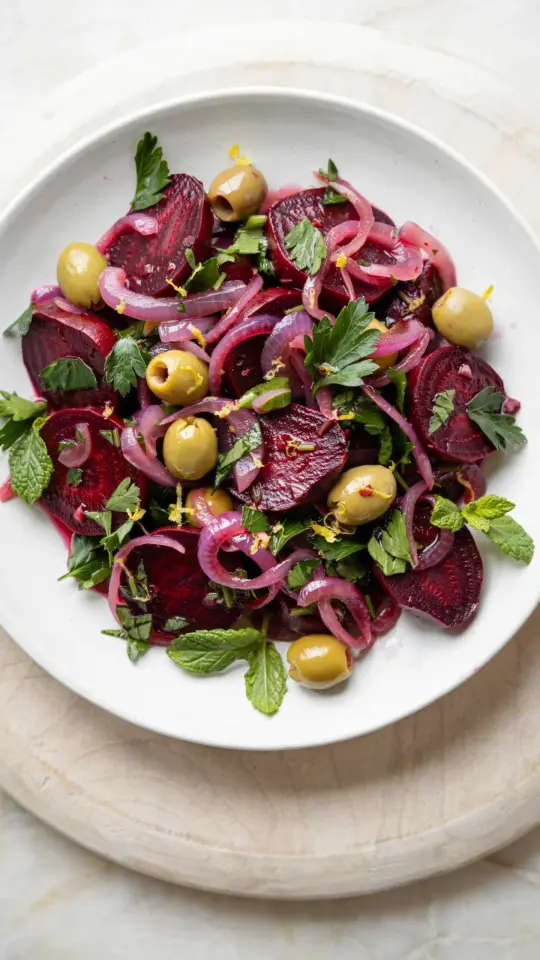
If you love the tangy crunch of fermented vegetables, this pickled beet salad is about to become your go to winter salad. I have made it countless times for holiday gatherings and cozy weeknight meals, but I have also messed it up more than I care to admit. Over the years I learned that a few small slip ups can turn a vibrant side dish into a soggy, bland mess. So let me walk you through the most common mistakes and how to avoid them, so your pickled beet salad comes out perfectly every time.
Why Most Pickled Beet Salads Turn Soggy (And How to Fix It)
The biggest mistake I see is using freshly pickled beets straight out of the jar without draining them properly. All that extra brine makes the salad watery and dilutes the dressing. The beets themselves also release liquid as they sit, especially if they are cut too thin.
To fix this, drain your pickled beets well and pat them dry with a clean kitchen towel or paper towels. Then let them rest on a plate for about 10 minutes before you add them to the bowl. If you are using homemade pickled beets, make sure they have been fermented long enough (at least 5 days) so the texture stays firm. Thinly slicing beets for fermentation works, but for a salad I prefer quartered or diced chunks. They hold their shape better and don’t turn mushy overnight.
Picking the Wrong Beets for Your Fermented Vegetable Salad
Not all beets are created equal for this winter salad. I once grabbed the largest beets at the farmers market, thinking bigger meant better. They were woody and tough, even after pickling. Smaller to medium beets (about golf ball to tennis ball size) are sweeter and have a more tender texture that holds up well in fermentation.
Also, avoid beets that have soft spots or look shriveled. For the best results, choose fresh beets with the greens still attached if possible. Those greens tell you the beets were recently harvested. And if you are using pre pickled beets from a store, look for ones that are labeled “fermented” or “naturally pickled” with no added sugar or preservatives. That gives you the authentic tang of fermented vegetables without a sickly sweet aftertaste.
Avoiding a One Note Flavor Profile in Your Healthy Holiday Side Dish
Pickled beets are already bold, so it is easy to end up with a salad that tastes only of vinegar and earthiness. I have made that mistake more than once. The secret to a balanced healthy holiday side dish is contrast: creamy, crunchy, salty, and fresh elements to offset the tangy beets.
Here is what I always add to build layers of flavor:
- Crunchy nuts: toasted walnuts or pecans add warmth and texture
- Creamy cheese: crumbled feta or goat cheese cuts the acidity
- Aromatics: fresh dill, chives, or even a little grated orange zest
- Sharpness: thinly sliced red onion or shallots
- Bitterness: a handful of arugula or watercress to balance the sweetness
Do not skip the salt either. A pinch of flaky sea salt right before serving wakes up all those pickling ideas and makes the whole salad sing.
Overlooking the Dressing (Even Though the Beets Are Pickled)
Because the beets are already pickled, many people think they can just toss them with cheese and nuts and call it done. But that makes the salad dry and clumpy. A light dressing is still necessary, but it should complement not compete with the fermented vegetables.
My go to dressing for this winter salad is a simple mustard vinaigrette: one part apple cider vinegar (or lemon juice), two parts olive oil, a teaspoon of whole grain mustard, and a tiny squeeze of honey. Whisk it together and pour just enough to lightly coat the ingredients. The mustard ties the tangy beets and creamy cheese together without overpowering them. If you want to try more pickling ideas, you can even swap the vinegar for a splash of brine from the beet jar. It adds extra fermented flavor with zero waste.
Forgetting to Let the Salad Rest Before Serving
I have learned the hard way that this salad needs a little time to marry its flavors. If you serve it right after mixing, the dressing sits on top and the beets taste separate from everything else. Letting it rest in the fridge for at least 30 minutes (or up to overnight) allows the pickled beets to gently season the cheese, nuts, and greens.
One caveat: if you are using leafy greens like arugula or spinach, do not add them until just before serving. Otherwise they will wilt and turn sad. I assemble the beet, nut, cheese, and onion mixture ahead of time, cover and refrigerate it, then fold in the fresh greens and a final sprinkle of dill right when I am ready to eat. That simple trick keeps the salad vibrant and crisp.
Using the Wrong Nuts and Not Toasting Them
Raw nuts are a common mistake in many fermented vegetable salads. They taste bland and can even be slightly bitter, especially walnuts. Toasting nuts brings out their natural oils and adds a deep, toasty crunch that stands up to the tangy beets. Do it in a dry skillet over medium heat for 3 to 5 minutes, shaking often until they smell fragrant. Let them cool completely before adding to the salad.
Also, think about size. Whole walnut halves can be overwhelming in a forkful. I roughly chop them so you get a little crunch in every bite without a jaw workout. Pecans, almonds, and even pumpkin seeds work well too. Just stick with one type so the texture is consistent.
Storing Leftovers Wrong (And Losing the Crunch)
If you plan to make this healthy holiday side dish for meal prep, store the components separately. Once the dressing and nuts are mixed with the pickled beets, the nuts will soften in a few hours. I keep the toasted nuts in a small baggie or
#pickledbeetsalad #wintersalad #fermentedvegetables #picklingideas #healthyholidayside
Leave a Comment