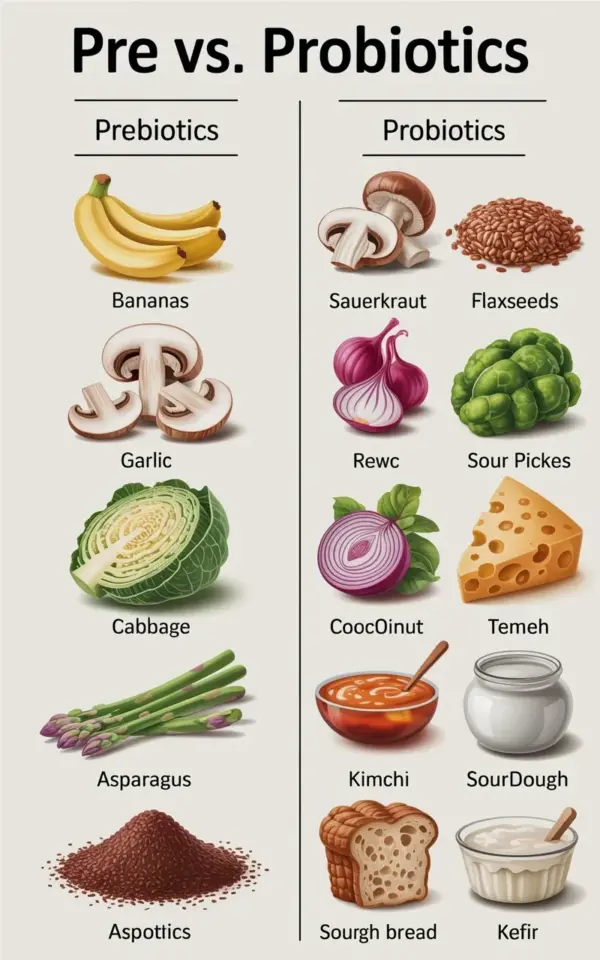
It started with a labeled grocery haul on my phone, one of those half-screenshot, half-infographic things that usually get a quick scroll and a dismissive “noted.” But this one stuck, because it was literally the prettiest argument for eating on a budget that I have ever seen. The infographic breaks down prebiotics vs probiotics with real foods, not obscure powders or overpriced capsules, and if you’re trying to feed your body better without wrecking your bank account, this is the exact roadmap you need.
The photo itself is a masterclass in simple nutrition. Two clean columns, bold text, and sixteen everyday ingredients that change the way your gut works. I saved it immediately, and honestly, I think you should too. Here is everything that visual taught me, plus some practical ways to actually use these foods this month.
The Prebiotic Half: Fuel for the Good Bacteria
The left column of that infographic is all about prebiotics, and it’s basically a list of stuff you probably already have in your kitchen. Sliced bananas, mushrooms, flaxseeds, garlic, cabbage, red onion, asparagus, and cocoa powder. That’s it. No exotic berries, no specialty health food store aisle. These are foods that feed the good bacteria already living in your gut.
Garlic works for this. So does cabbage. And if you’re staring at a sad, wilted bunch of red onions in your crisper drawer, look, that works too. The idea is that prebiotics are the fertilizer for your microbiome, and these cheap, fibrous vegetables do the job without any expensive marketing hype.
Probiotic Foods on a Budget: More Than Just Yogurt
The right column of the graphic flips over to probiotics, and this is where it gets interesting. Sure, you see sauerkraut and raw cheese, but also sour pickles, which honestly surprised me. I always assumed pickles were just salty snacks, but the fermented kind are legit little probiotic bombs. Not the vinegar-pickled ones, mind you, but the ones that sit in brine and naturally ferment. Huge difference.
Now, raw cheese is a bit of a splurge. I will not pretend otherwise. But sauerkraut is dirt cheap, and you can make it at home with a jar of cabbage and some salt. There is no reason to buy probiotic supplements when a forkful of kraut does the same thing for a fraction of the cost. The texture is crunchy, the flavor is sour, and it genuinely makes your stomach feel like it just reset itself.
October Is the Real Season for a Gut Reset
This infographic could not have shown up at a better time. We are in that weird transitional month where the weather is unpredictable, the local market is full of root veggies, and everyone is suddenly interested in “cleaning up” their diet before the holiday chaos begins. It is trendy to do a gut cleanse in January, but late September and October are actually the smarter window.
Why? Because cabbage is in season. Onions are cheap. Garlic is everywhere. These are literally the foods in the left column, and they are at their peak right now. It feels less like a chore and more like eating what the earth is giving us. Plus, there is something deeply satisfying about fermenting a batch of cabbage while the first chilly breeze rolls in. It feels resourceful. Like you are putting food away for winter, even if you are just doing it for the gut health.
How to Pair Them in One Meal Without Overthinking It
Here is the thing about prebiotics and probiotics: they work better together. One feeds the other, so combining them in a single meal is the lazy genius move. You do not need a complicated recipe. You just need a bowl.
Take some roasted cabbage and onions, toss them with a handful of cooked mushrooms, and slice a banana on the side for later. Then throw a spoonful of sauerkraut right on top of the warm vegetables. It sounds weird to mix hot and cold food, but the contrast is actually delicious. The warm, soft texture of the cabbage against the crisp, tangy kraut… that’s a texture party, honestly.
The infographic makes this easy by showing the pairing visually. You glance at the left column, pick a prebiotic, glance at the right column, pick a probiotic, and boom. You have a gut-supporting meal that cost you maybe four dollars. That is the whole secret. There is no need to overthink the science when the visual is right there.
A Smart Grocery List for the Next Few Weeks
I pulled the exact foods from the infographic and turned them into a simple shopping list. Stick this on your fridge or screenshot it for your next trip. It keeps you honest and stops you from grabbing the same five sad items every week.
- Prebiotic picks to stock up on: bananas, mushrooms, flaxseeds, garlic, cabbage, red onion, asparagus, cocoa powder.
- Probiotic options that won’t break the bank: sauerkraut, raw cheese, sour pickles.
- A quick tip: buy the pickles in the refrigerated section, not the shelf-stable aisle, because the live cultures die in the vinegar processing.
That list is the entire infographic in shopping form. It is not a diet plan, it’s just a reminder that healthy eating is supposed to be accessible. You can spend a ton of money on specialty “gut health” products, or you can spend eight bucks on cabbage and garlic and get the same result. I know which one I am choosing.
The Supplement Conversation: Save Your Money for the Real Food
There’s a persistent myth that you need a cabinet full of expensive capsules to sort out your digestion. Look, I have tried them. I have bought the fancy probiotic that costs forty dollars a bottle and requires refrigeration. And you know what? I felt absolutely nothing. Not one noticeable change. The infographic is so refreshing because it calls out that nonsense by showing the actual food sources instead.
The visible difference is in the freshness you can get in real food. A slice of raw cheese has live enzymes. A spoon of sauerkraut is alive. Cocoa powder, of all things, has prebiotic benefits that make hot chocolate feel like a wellness hack. Who decided that supplements were the answer when we have chocolate and pickles? This is the budget-friendly truth that the graphic hammers home.
Anyway, if you are looking to support your gut without supporting a supplement company’s profit margin, this infographic already did the work for you. Save that picture, screenshot this list, and let the farmers market be your pharmacy this season.
Your gut will thank you for the real stuff, and honestly, your wallet will too. Next time you’re planning a grocery run, remember that the most colorful part of your cart should be the produce, not the pill bottles. Happy shopping, and may your sauerkraut always be crisp.
Leave a Comment