I used to think my gut issues were just something I had to live with. Bloating after meals, weird energy crashes, and a general sense that my digestion was staging a slow protest. I tried probiotics from the pharmacy shelf, expensive ones with fancy strains, and honestly, I felt nothing. Then a friend who actually reads nutrition studies for fun asked me a simple question: “Are you feeding them?” That’s when I realized I knew nothing about the prebiotics vs probiotics difference, and it changed everything.
What Is the Real Difference Between Prebiotics and Probiotics?
Here’s the short version. Probiotics are the live bacteria themselves, the little guys that take up residence in your gut and do useful work. Prebiotics are the food those bacteria eat, mostly specific types of fiber that your body can’t digest but your microbes absolutely love. Think of it like having a house full of pets. Probiotics are the pets, and prebiotics are the kibble. Without the kibble, your pets get listless and die off.
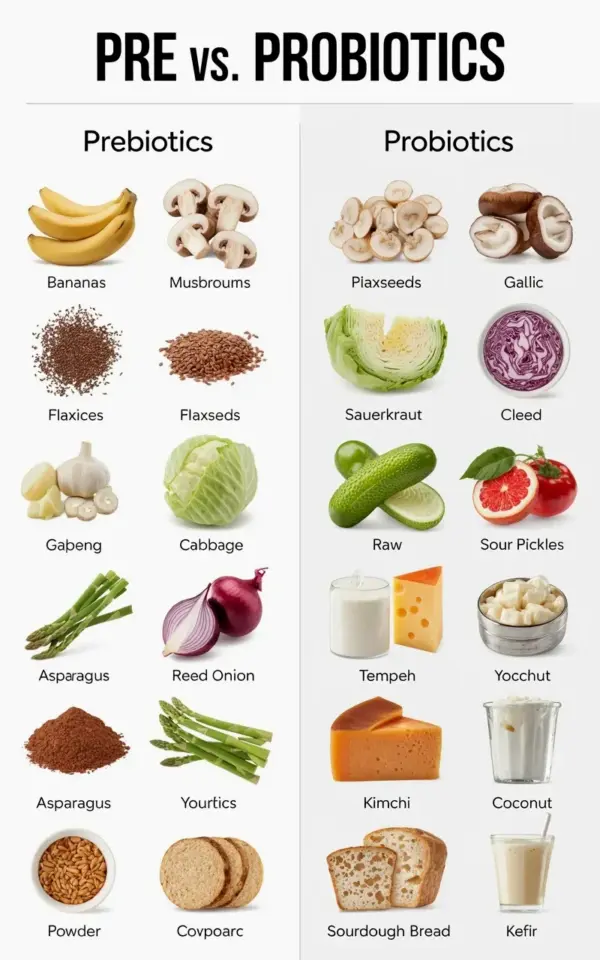
I used to picture my gut as a kind of internal farm. The probiotics are the farmers, and the prebiotics are the fertilizer they need to grow crops. It’s a team effort, not a competition. The infographic I made for this post shows two clean columns, prebiotics on the left and probiotics on the right. I put sliced bananas, mushrooms, flaxseeds, and diced garlic on the left. On the right, I arranged sauerkraut, raw cheese, and sour pickles. Simple visual, but it gets the point across.
Best Prebiotic Food Sources You Can Eat Today
You don’t need a supplement for this. You need groceries. The prebiotic column in my infographic is basically a shopping list I now keep on my fridge. When I’m meal planning, I just make sure a few of these show up in my weekly rotation.
- Garlic and onions. Diced raw garlic packs a punch, but even cooked, it feeds your good bacteria. Red onion on a salad is an easy win.
- Bananas and apples. Underripe bananas have more resistant starch, but any banana is decent. Apples give you pectin, which is a gentle prebiotic.
- Asparagus and cabbage. Steamed asparagus is a side dish that doubles as microbe fuel. Whole cabbage, whether in slaw or sauerkraut, is fantastic.
- Flaxseeds and cocoa powder. Ground flaxseeds are weirdly efficient. And unsweetened cocoa powder in your morning coffee is a delicious way to sneak in polyphenols.
- Jerusalem artichokes and chicory root. These are the heavy hitters, the ones you see in supplement labels. They contain inulin, which is a superstar prebiotic.
I keep a bag of flaxseed meal in my pantry and just sprinkle it on oatmeal or yogurt. It doesn’t taste like much, which is perfect, because I can add it to anything without ruining the flavor. The mushrooms are another underrated option, and they pair well with almost any savory dish.
Probiotic Rich Foods That Are Actually Worth Eating
Now for the live cultures. The probiotics column on the right of my infographic starts with sauerkraut, raw cheese, and sour pickles because those are the foods I actually eat, not just the ones that look pretty in a photo. Raw cheese, look, I know it’s not as trendy as kimchi, but unpasteurized cheese naturally contains beneficial bacteria depending on the type. It’s one of my favorite snacks.
You want to look for fermented foods that haven’t been pasteurized or heat-treated after fermentation. The heat kills the bacteria, which kind of defeats the whole purpose. I check labels for “live and active cultures” or shop the refrigerated section where the good stuff hangs out. My daily picks are usually sauerkraut, which I put on eggs or rice bowls, and sometimes kefir, which is like a drinkable yogurt. Sour pickles, the kind that are brined with salt, not vinegar, are another good choice. They’re crunchy, tangy, and they count.
Yogurt is the obvious one, but not all yogurt is created equal. I look for plain, unsweetened yogurt with active cultures. The sugary fruit-flavored ones are more dessert than medicine, and they’re often pasteurized after culturing anyway.
Why You Need Both for a Healthy Gut
Ok so here’s the thing. I spent about a year and a half taking a probiotic supplement without really thinking about what I was feeding those bacteria. I thought I was being so proactive. Then I learned that probiotics are transient, which means they pass through your system if they don’t have a stable food source to colonize and thrive. You’re just renting them for a day or two.
Prebiotics are what keep them around longer. When you eat both, the prebiotic fiber ferments in your colon and produces short-chain fatty acids, things like butyrate. Butyrate is basically fuel for the cells lining your colon. That’s where the real magic happens. That’s where my bloating finally started to ease up.
I always tell people to think of it like a campfire. The probiotics are the logs, but you still need kindling and a match to get it going. Prebiotic fiber is the kindling. It’s the spark. Without it, you’re just stacking wet logs in the rain and hoping for heat.
My Simple Daily Prebiotic and Probiotic Routine
Here’s what actually worked for me, and I promise it’s not complicated. In the morning, I have a smoothie with a handful of spinach, half a banana, a tablespoon of ground flaxseeds, and some kefir. That one drink covers both sides of the equation. It takes four minutes, and I’ve been doing it for about two years now, so it’s just habit.
Lunch usually involves some kind of fermented vegetable. If I’m having a sandwich, I’ll pile on sauerkraut. If I’m having a salad, I’ll chop up some raw cabbage and toss in whatever veggies I have. Dinner is variable, but I try to add onion or garlic to almost everything. The flavor is worth it, and the microbes appreciate it too.
I don’t take a probiotic supplement anymore. It’s not that they’re useless, but for me, whole foods feel more effective and they’re way cheaper. Plus, getting fiber from real food means I’m also getting vitamins and minerals. A pill won’t give you asparagus.
Easy Food Swaps to Boost Your Fiber Intake
If you’re not ready to overhaul your diet, just make some small substitutions. Swap white rice for a smaller portion of barley or quinoa, which have more fiber. Add beans to your ground meat recipes to stretch them out and add prebiotic power. Use sliced mushrooms as a partial substitute for meat in tacos, it’s honestly better that way. Snack on an apple with some almonds instead of crackers and cheese.
These swaps don’t sound exciting, I know. But they add up over a week. I like to remind myself that variety matters more than volume in this case. Eating a little bit of many different fibers is better for your gut than eating a lot of just one source. Think of it as giving your microbes a buffet instead of a single boring entree.
What About Prebiotic and Probiotic Supplements?
Supplements can help in specific situations, like after a round of antibiotics or if you have a diagnosed condition. But for the average person just trying to feel better, food is the better route. I’ve tried a few, and they made me feel weirdly gassy or just did nothing at all. The research is promising, but it’s also very strain-specific and dose-specific. You can’t just grab any bottle off the shelf and expect miracles.
There are also “synbiotics” now, which are products that combine prebiotics and probiotics in one capsule. It’s a clever idea, but I’d rather get my fiber from real plants. My wallet agrees with me. If you do go the supplement route, look for a reputable brand and talk to your doctor first. Don’t just trust the marketing copy on a jar with a smiling intestine on it.
My Final Thoughts on Gut Health
Honestly, my gut is a lot happier now that I treat it like a garden instead of a garbage disposal. It took some trial and error, but the prebiotics vs probiotics difference was the missing piece for me. The infographic sums it up nicely: left side, plant foods with fiber. Right side, fermented foods with live cultures. Both are good. Together, they’re even better.
If you’re feeling stuck or just confused, start small. You don’t need to buy a dozen new ingredients today. Pick one prebiotic food and one probiotic food from the lists above, then find a way to eat them tomorrow. Sauerkraut on a hot dog counts, seriously. Your gut bacteria are waiting.
Leave a Comment