Ever get confused between prebiotics and probiotics? You are not alone.
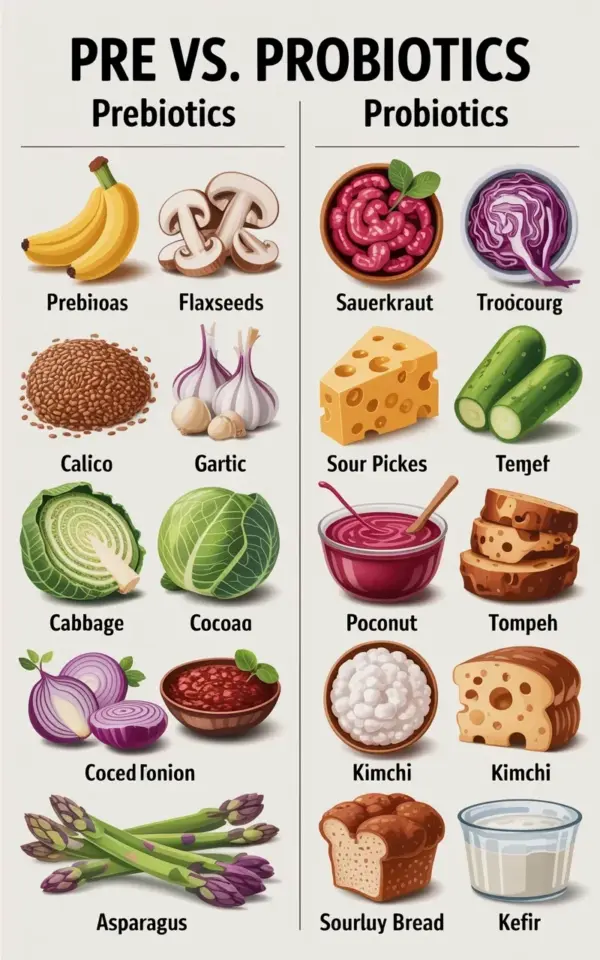
I used to stand in the grocery aisle staring at yogurt containers and supplement bottles, trying to remember which one does what. It feels like a science class you never signed up for. But here is the simple truth: prebiotics and probiotics work as a team, and the easiest way to tell them apart is with a visual cheat sheet. That is exactly why I love the infographic that shows them side by side. On the left, you see prebiotic foods like bananas, mushrooms, flaxseeds, garlic, cabbage, onion, asparagus, and cocoa. On the right, probiotic stars like sauerkraut, raw cheese, and sour pickles. This article gives you a practical how-to guide so you can start using that infographic on your next grocery trip.
What Exactly Are Prebiotics and Probiotics? A Quick Refresher
Probiotics are live bacteria that help keep your gut balanced. Think of them as the friendly bugs living in your digestive system. Prebiotics are the food those bugs eat to stay strong and multiply. Without prebiotics, probiotics struggle to survive. It is a bit like having a garden. Probiotics are the seeds, and prebiotics are the fertilizer. You need both for a thriving gut.
Many popular health foods contain one or the other, but not always both. That infographic lays it out perfectly. The left column shows prebiotic sources. The right column shows probiotic sources. Once you understand the difference, adding them to meals becomes second nature.
Why You Need Both for Gut Health (Not Just One)
Focusing only on probiotics without prebiotics is like buying a new plant and forgetting to water it. The live bacteria in probiotic foods need fuel. Without that fuel, many of them die off before they can do any good. On the flip side, eating only prebiotics without probiotics means your gut has food but not enough workers to feast on it.
A balanced approach makes digestion smoother, supports your immune system, and even helps with mood. I noticed a real difference when I started pairing a probiotic food (like a forkful of sauerkraut) with a prebiotic (like a handful of asparagus). The combination just works better.
How to Add Prebiotic Foods to Your Plate (The Left Column)
The prebiotic side of the infographic is packed with everyday ingredients. You probably already have some in your kitchen. Let me run through them with practical ideas:
- Bananas – Slice one over your morning oatmeal or blend into a smoothie. Slightly green bananas have more prebiotic fiber than very ripe ones.
- Mushrooms – Sauté them with garlic and onion for a simple side dish. Crimini and shiitake work great.
- Flaxseeds – Grind them fresh (whole seeds pass through undigested) and sprinkle on yogurt or salad.
- Garlic and onion – Use them as a base for almost any savory dish. Roasted garlic on toast is an easy win.
- Cabbage – Shred it raw into coleslaw or lightly steam it. Bonus: you can ferment it into sauerkraut, which is a probiotic.
- Asparagus – Roast with olive oil and salt for a quick side. Cold leftover asparagus is great in salads too.
- Cocoa powder – Yes, chocolate! Unsweetened cocoa in your coffee or smoothie adds prebiotic fiber. I use a tablespoon in my morning shake.
Pick two or three from this list and rotate them weekly. You do not need to eat every single one every day. Variety is what counts.
Probiotic Foods You Can Easily Find (The Right Column)
The infographic shows three probiotic stars: sauerkraut, raw cheese, and sour pickles. But not all versions of these foods are probiotic. Store-bought sauerkraut is often pasteurized, which kills the live bacteria. Look for refrigerated brands labeled “raw” or “unpasteurized.” The same goes for pickles. Sour pickles that are naturally fermented (not vinegar-based) are the real deal. Check the ingredients – if you see vinegar, it is not a probiotic.
Raw cheese is a bit different. It comes from unpasteurized milk, which preserves beneficial bacteria. Not every grocery store carries it, but you can find raw cheddar or gouda at farmers markets or specialty shops. I add a small chunk to my lunch plate a few times a week. Fermented foods like kimchi, plain yogurt with live cultures, and kefir are also excellent probiotics even though they are not in the infographic. Mix it up based on what you enjoy.
A Simple Step by Step Guide to Balancing Your Gut
Here is a practical routine I follow. You can adjust it to fit your schedule.
Step 1: Choose one prebiotic food from the left column and one probiotic from the right each day. For example, have a banana with breakfast and a forkful of sauerkraut with dinner.
Step 2: Start small. If you are not used to fermented foods, begin with a tablespoon of sauerkraut or a slice of raw cheese. Too much too fast can cause gas or bloating.
Step 3: Pair them in the same meal when possible. The probiotics need that prebiotic fuel to survive the journey through your stomach. A good combo: roasted asparagus (prebiotic) with a side of raw cheese (probiotic).
Step 4: Keep the infographic saved on your phone. Before you go grocery shopping, glance at it. Pick two prebiotic and one probiotic item to buy that week. Over time you will memorize the list.
Step 5: Rotate your choices. Eating the same foods every day limits the diversity of bacteria in your gut. Try cabbage one week, flaxseeds the next. Your gut bugs will thank you.
Common Mistakes to Avoid When Shopping
I have made all of these mistakes, so learn from me. First, do not assume that all fermented foods contain live probiotics. Many commercial sauerkrauts and pickles are heat-treated. Look for “raw,” “unpasteurized,” or “live cultures” on the label. Second, cooking kills probiotics. Add sauerkraut to a dish after it comes off the heat, not while it simmers. Third, raw cheese must be refrigerated properly. If it sits out too long, the good bacteria can die.
Another trap is thinking that supplements replace food. Supplements can help, but real foods offer fiber, vitamins, and other compounds that pills lack. Use the infographic as your food-based roadmap. Your gut will respond better to a bowl of oatmeal with sliced banana and a side of tangy sauerkraut than to a handful of capsules.
Start with one small change today. Put a banana in your bag for a snack or grab a jar of raw sauerkraut next time you shop. The infographic is your guide. Save it, use it, and watch how your digestion feels after a week of adding these foods. Your gut will let you know it notices the difference.
#prebiotics #probiotics #guthealth #healthyeating #nutritiontips
Leave a Comment