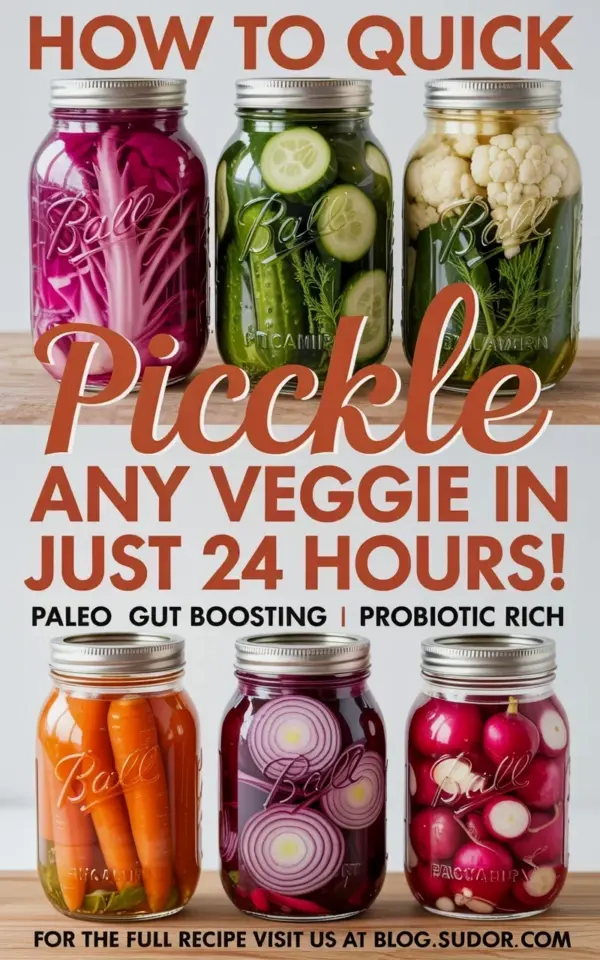
Look, I love instant gratification as much as the next person. But when it comes to quick pickling, that urge to crack open the lid after just a few hours is basically your tastebuds lying to you. You see those six mason jars on the counter – pink cabbage, dill cucumbers, white cauliflower, orange carrots, deep red onions, and red radishes – and everything looks so bright and promising. But here’s the honest truth: open them too early and you’ll get watery, barely flavored veggies that taste like sad brine with a hint of vinegar. The #1 quick pickling mistake is not waiting a full 24 hours for these colorful veggies to properly soak up the brine. I learned this the hard way last summer when I served pickled radishes that tasted like crunchy nothing. Never again.
Why pink cabbage needs a whole day to pick up the brine
Pink cabbage is a showstopper. I mean, that jar in the photo with the electric pink color? That doesn’t happen by accident. The anthocyanins in the cabbage react with the acidic brine to create that gorgeous shade, but the reaction takes time. Pop the lid after six hours and you’ll get pale, crunchy shreds that barely taste pickled. Wait the full 24 hours and the color deepens, the texture softens just enough, and every bite has that tart-sweet balance. Honestly, it’s worth setting a timer for this one. I’ve made the mistake of sampling at hour 12 and regretted it – the cabbage was still too raw, too stubborn. A day later, magic happens.
Dill cucumbers: the crunch lovers’ test of patience
These are the classic quick pickles everybody wants. The jar in the image shows whole cucumbers with dill fronds floating around – looks ready, right? Wrong. Cucumbers have thick skins and even thicker flesh. The brine needs time to penetrate past the exterior. Not gonna lie, I’ve chewed on a cucumber pickle that had been sitting for only eight hours. It was basically a salty, vinaigrette-covered raw cucumber. Disappointing. 24 hours lets the dill really assert itself too. The aroma changes. The flavor becomes cohesive. And the crunch stays – that’s the fun part. Quick pickling doesn’t turn them into mush, just gives them a reason to exist. So resist the temptation. Go do something else for a day.
White cauliflower soaks up flavor slowly (and that’s okay)
Cauliflower is dense. Like, really dense. That jar of bright white florets looks pristine, but inside each tiny floret is a stubborn matrix that resists penetration. I once opened a jar of cauliflower at hour 20 because I was hungry and impatient. And it was okay, I guess, but the inside of each piece was still plain cauliflower. The brine only coated the outside. So here’s the thing: cauliflower needs that full 24-hour window to become fully infused. The brine seeps into all the nooks and crannies, and you end up with a little burst of tang in every bite. Also, the florets stay wonderfully crisp if you don’t boil them first. Raw pack, full wait, total payoff.
Orange carrots: sweet meets sour, but only after a long rest
Carrots are sneaky. They have natural sugar that mutes the salty-sour profile early on. That orange batch in the bottom row looks so cheerful, but taste it at hour six and you’ll wonder why everyone raves about pickled carrots. The answer is patience. Sugar needs time to rebalance with the vinegar. After about 18 hours something clicks. The carrot slices (or sticks) start to taste like a proper pickle – sweet, tangy, a little earthy. And orange carrots stain the brine a lovely pale amber. I like to say they’re the introverts of the pickling world: they don’t open up until they’re good and ready. 24 hours, minimum.
Deep red onions: the fastest to transform (but still worth waiting for)
Okay, so red onions are actually the one exception where you could get away with a shorter time – they start turning pink within an hour because the onion layers are thin. But here’s the thing: they also get bitter if you pull them too early. I’ve had pickled red onions that tasted harsh and astringent because the brine hadn’t mellowed the sharpness yet. That deep red jar in the photo looks intense, but if you wait a full day, the harshness fades into a gentle, almost sweet tang. The color actually deepens to a wine-red, and the slices become limp and tender. So yes, you can eat them after a few hours. But the good ones reward the wait. I usually make a double batch – one that I nibble early (because I can’t help myself) and one I let sit the full 24 hours. The difference is night and day.
Red radishes: small but mighty brine sponges
Radishes look like they’d be quickest to absorb, right? They’re small, sliced thin, and porous. And actually they do take up flavor faster than most – within 6 hours you’ll have a decent pickle. But here’s the catch: radishes have a peppery bite that can overwhelm the brine if you don’t give it time to marry. That jar of red radishes in the photo looks gorgeous, but early they taste like two separate things – vinegar and radish – that haven’t met yet. After 24 hours, the flavors blend into a harmonious spicy-sour goodness. Plus the radish itself gets a little less crunchy, which I prefer. Some people like them super crisp, but I think a slight give makes them feel more like a pickle and less like a raw vegetable that fell into a vat of vinegar. Just my two cents.
- Set a reminder on your phone for exactly 24 hours after you seal the jars. Do not open early, not even for a sniff.
- Use a clean spoon when you finally open them – contamination can ruin your whole batch after waiting that long.
- Keep the jars in the fridge the whole time. Room temperature brine can mess with texture and safety.
- Rotate the jars once after 12 hours if you want even distribution of briny goodness.
A weird little trick to help you wait (it works)
So here’s my mildly odd personal detail: I label my jars with two dates. One is the “Do Not Open” date (24 hours out), and the other is the “You Can Open Now But You’ll Regret It” date (12 hours out). Something about physically writing a future date stops me from peeking. Also, I hide the jars in the back of the fridge, behind the yogurt. Out of sight, out of mind – or at least out of immediate reach. The day after they’re ready, I pull them out and arrange them on a wooden board just like that photo. Six jars. Six colors. And the first crunch makes the whole 24-hour wait feel like nothing. Seriously.
So go ahead, make your colorful quick pickles. But remember: patience pays off. Let the brine do its work, let the veggies become friends with the vinegar, and don’t open those lids until a full day has passed. Your tastebuds will thank you. And when you finally taste that pink cabbage or that dill cucumber, you’ll know exactly why I’m so insistent. Now go grab some jars and start pickling – and maybe set that phone timer right now so you don’t forget.
#quickpickling #pickledvegetables #homemadepickles #picklingtips #colorfulfood
Leave a Comment