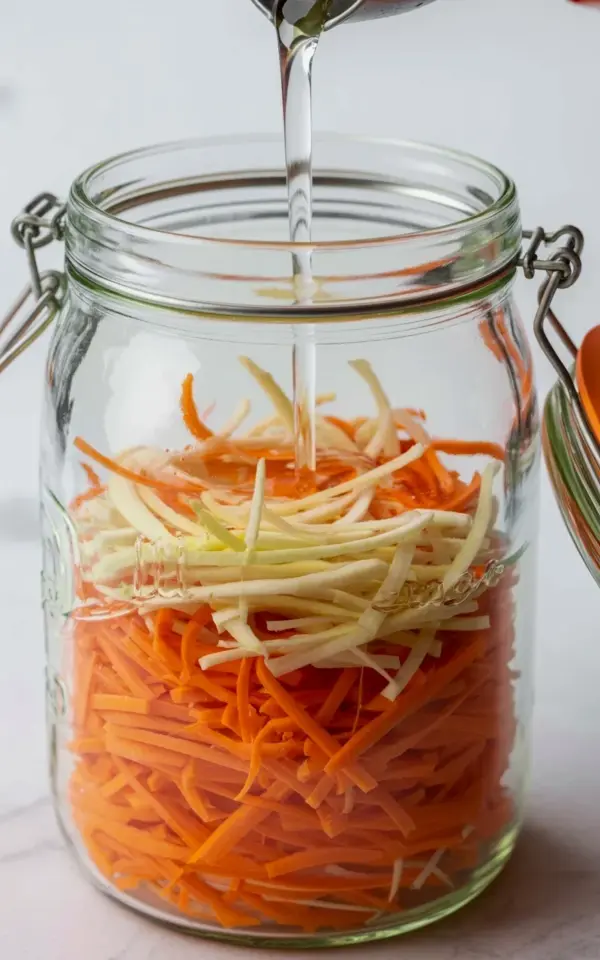
See that stream of liquid cutting through the bright orange carrot shavings and the white daikon strips in the photo? That is just simple vinegar, sugar, and salt dissolving into water. Honestly, making vietnamesepickledcarrots and daikon at home is one of those kitchen skills that looks impressive but requires almost no actual talent. I have a notoriously lazy streak in the kitchen. And even I can pull this off. This specific batch in the picture? Cost me less than two dollars. Maybe a dollar fifty. Ridiculous, right?
The Duo That Does the Heavy Lifting
Ok so let’s talk about the stars here. Carrot gives you that bright sweetness and a familiar crunch. But daikon is the real MVP. It is a root vegetable that soaks up flavor without getting mushy.
- The carrot brings the color and natural sugar.
- The daikon brings the texture and a mild, slightly peppery bite that just loves vinegar.
- Together, they create that classic dochua balance.
I remember buying pre-shredded carrots once to save time. Don’t do it. They are too thin and turn into a sad, floppy mess. Grate them yourself. Thick cut. Trust me on this. I learned that lesson the hard way on a Tuesday night when I was too tired to argue with myself.
Let’s Talk About the Budget Pickling Reality
Here is the thing about budgetpickling: it is almost too easy. You spend a dollar on a massive daikon. You spend fifty cents on a couple of carrots. You probably already have the vinegar, sugar, and salt in your pantry.
Try buying a jar of gourmet pickled vegetables at the store. It will cost you eight bucks. And it will not taste as fresh.
- Why it is so cheap: Daikon is a workhorse crop. Cheap as dirt.
- Carrots are always affordable.
- The brine is just pantry staples.
I am honestly baffled that more people do not make this. It is cheaper than buying a bag of chips. And way more useful for perking up a sad lunch bowl.
Memorize This Brine, Forget the Rest
Look, you do not need a fancy recipe card for hommadepickles. You need a ratio. One part sugar. One part salt. One part vinegar. Two parts water.
Heat it until the sugar dissolves. Let it cool. Pour it over your shredded veg in that mason jar (the one in the photo with the hinged lid and metal clasps. I love those jars. They seal perfectly).
- Use distilled white vinegar for a classic sharp tang.
- Rice vinegar works too, making it a bit milder.
- Do not pour hot liquid directly onto the veggies if you want them super crunchy. Let it cool to warm or room temp.
(Ok, tiny tangent: I once used apple cider vinegar because I ran out. Smelled like a farm for a day or two. Tasted okay eventually but stick to the plan, yeah?)
So You Made a Jar. What Now?
Obviously, pickleddaikon and carrots belong on a banh mi. That is its soulmate. But what else can you do with a jar of this stuff?
- Throw a handful into a simple green salad. The tang replaces the need for a heavy dressing.
- Pile it on top of grilled pork or chicken. Instant fresh slaw.
- Tacos. Seriously. Vietnamese pickled daikon in a taco is a game changer. The crunch is unreal.
- Rice bowls. Boring lunch? Add a fried egg, some leftover meat, and a heap of this pickle. Texture explosion.
I even put it on hot dogs last summer. My husband looked at me like I was crazy. Then he ate three. No leftovers.
The Secret to That Perfect Crunch
Not gonna lie, the first time I made this, the carrots went a bit floppy. It was sad. Here is what I learned. Salting the shredded vegetables first is a game changer. Sprinkle them with salt, let them sit for 20
#vietnamesepickledcarrots #dochua #budgetpickling #pickleddaikon #hommadepickles
Leave a Comment