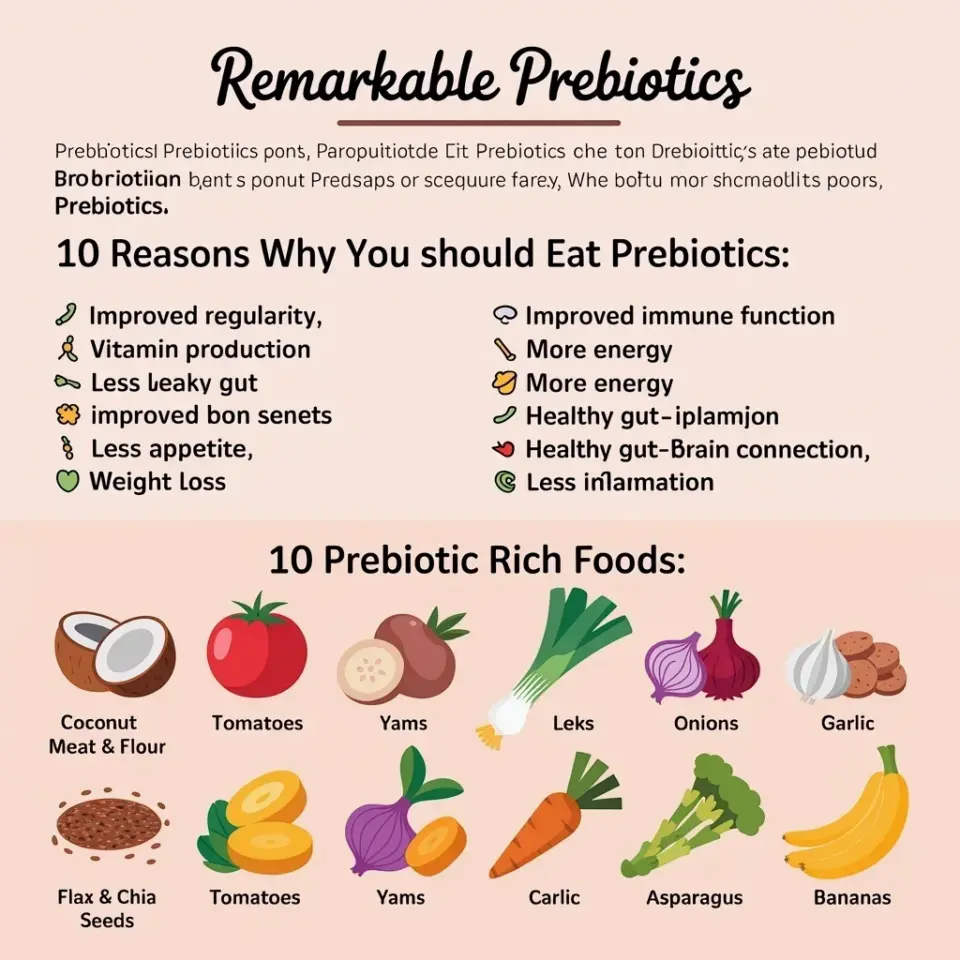
You’ve been swallowing probiotics like a dutiful little soldier, and yet your stomach still grumbles on the daily. Here’s a truth that doesn’t get enough airtime: your microbiome is not starving for bacteria, it’s starving for prebiotics. Those are the plant fibers that feed the good bacteria already living in your gut. No prebiotics, no party. That’s why probiotics alone can feel like a complete waste of money.
Mistake #1: Chasing Probiotics While Ignoring Prebiotics
Look, probiotics are not useless. They introduce live bacteria into your system, which is great. But your gut doesn’t want new settlers if there’s nothing on the table for them. Prebiotics are the food, the fuel, the breakfast, lunch and dinner for those microbes. If you only take probiotics, you’re basically sending new employees into a kitchen with no groceries. They’ll clock in, look around, and leave.
Why Your Probiotic Supplement Might Be a Waste of Money
Here’s a hard truth. Many probiotic strains pass through your digestive tract without ever putting down roots. They wave as they travel through, maybe out the other end. To actually help, they need to find a place to settle and multiply. That requires prebiotics like inulin, fructooligosaccharides, or resistant starch. Without those, they’re like a person moving into an empty house with no furniture, no food, and no Wi-Fi. Honestly, they don’t last long.
The Prebiotic Foods Nobody Tells You About
ok so, you don’t need a fancy powder. You need plants. Garlic, onions, leeks, asparagus, oats, bananas, and apples. Also Jerusalem artichokes, but good luck finding those everywhere. The easiest move is to cook with garlic and onions daily. A handful of oats in the morning. A banana that’s still a little green. These are not exotic. They are normal foods with a hidden superpower:
– Garlic and onions, the easiest pantry staples
– Oats, especially the kind you actually cook
– A slightly green banana (trust me on this, it’s the resistant starch)
– Asparagus, leeks, and artichokes if you want to feel elegant
– Cooked and cooled potatoes, which change their starch structure overnight
Common Mistake: Thinking Fermented Foods Solve Everything
Yogurt and sauerkraut are wonderful. They bring live cultures and a nice tangy crunch. But they are not the same as prebiotics. Fermented foods are probiotics in another outfit, they add bacteria. Prebiotics feed the bacteria you already have. You need both. Relying only on kraut is like inviting people over and forgetting to buy snacks. Your bacteria want snacks. And I’m not saying skip sauerkraut. I’m saying don’t make it your only move.
The Fiber Gap Is Real, and Your Microbiome Feels It
Most adults eat around 15 grams of fiber a day, maybe less. The suggested number is 25 to 38 grams. That’s a huge gap. And this is not just about being regular, although that helps. The microbes in your colon ferment fiber and produce short-chain fatty acids, which influence your mood, immune system, and inflammation. A low-fiber diet starves your microbiome. Then it sends you cravings, fatigue, and a foggy head. Funny how that works, you feed it poorly, it complains in feelings.
How to Start Feeding Your Good Bacteria Without Overthinking It
Begin with one meal. Swap your white bread for rye or whole grain. Throw a handful of oats into your smoothie. Add onions to whatever you’re frying. Keep a Tupperware of cooked potatoes in the fridge and reheat them the next day; the cooling turns them into resistant starch. Do that for a week and notice how your gut feels. It won’t be a miracle overnight. But something shifts. Your digestion gets a little quieter, and your mood gets a little lighter. That’s the microbiome sending a thank-you note.
The Real Goal: A Microbiome That Runs Itself
Prebiotics aren’t the only answer, but they are the foundation. Once your good bacteria are fed, they outcompete the not-so-good ones, produce nutrients, and keep your gut lining happy. The goal is diversity, lots of different plant fibers and whole foods. And please don’t fall for the latest 12-powder supplement drink. Your microbiome likes consistency, not a one-night stand. It prefers garlic on Tuesday and oats on Wednesday. Small, repeatable habits beat dramatic detoxes every time.
So if you’ve been loading up on probiotics and wondering why you don’t feel different, try adding prebiotics instead. Your gut will probably thank you, with better digestion and maybe a calmer head. Anyway, dinner tonight? Chop some onions, add a little garlic, and let your good bacteria eat first.
Leave a Comment